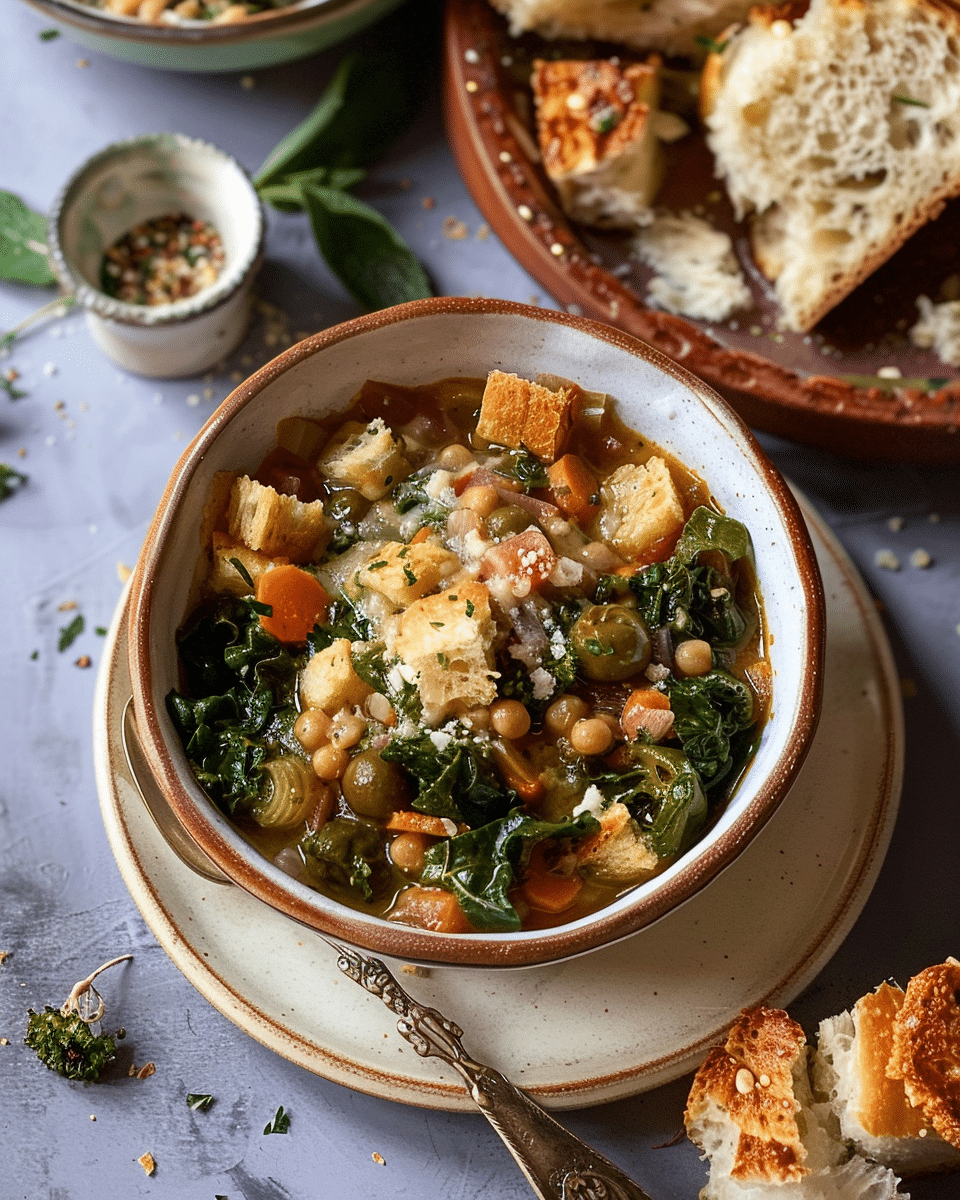
I appreciate how this ribollita turns simple, humble ingredients into a deeply satisfying dish. I enjoy how the vegetables slowly melt together while the bread thickens the soup into something that feels like a warm hug. I also love that it tastes even better the next day, making it perfect for meal prep or easy leftovers.
Ingredients
(Note: All ingredient amounts are listed in the recipe card below.)
1 celery stick 1 onion 300 grams black Tuscan kale 400 grams carrots extra virgin olive oil (for soffritto + drizzling) 1 savoy cabbage 500 grams cannellini beans (canned) 500 grams potatoes 200 grams peas 4-5 zucchinis (medium size) 500 grams stale Tuscan bread 300 grams tomato puree or 3 peeled tomatoes Fresh parsley (as desired) salt black pepper
Directions
I start by cutting the onion, celery, and carrots into very small pieces to create the classic soffritto base. I heat olive oil in a large pot and sauté the onion, celery, and carrots over medium heat until they soften. Then I add the black kale and savoy cabbage. As soon as the cabbage begins to cook, I add the tomato puree or peeled tomatoes, followed by the potatoes, chopped zucchini, and peas. Next, I add the cannellini beans along with salt, black pepper, and any herbs I want—parsley, thyme, or bay leaf all work beautifully. I let everything cook over low heat for about 1 hour, stirring occasionally. I slice the bread into thin slices and place a layer at the bottom of a soup tureen or deep bowl. I alternate layers of cooked vegetables and bread until the tureen is full, removing bay leaves if I used them. I cover the tureen and let it rest for 20 minutes. After resting, I serve the ribollita in bowls with a sprinkling of Parmesan cheese if I feel like it. I always finish with a drizzle of olive oil.
Servings and Timing
This recipe makes 4 servings. Prep Time: 5 minutes Cook Time: 1 hour 10 minutes Total Time: 1 hour 15 minutes
Variations
I also enjoy swapping the peas for green beans when they’re in season. If I want a thicker texture, I mash a portion of the cannellini beans before adding them to the pot. For a slightly brighter flavor, I occasionally finish the soup with a squeeze of lemon.
Storage/Reheating
I store leftovers in an airtight container in the refrigerator for up to 3 days. The soup thickens as it sits, and I find it tastes even better the next day. To reheat, I warm it gently on the stovetop with a splash of water or broth to loosen the texture. It can also be reheated in the microwave in short intervals, stirring between each.
FAQs
How thick should ribollita be?
I like it very thick, almost stew-like, because the bread absorbs much of the liquid.
Can I make ribollita ahead of time?
Yes, I often prepare it a day in advance because the flavors develop even more.
What type of bread works best?
I always use stale Tuscan bread, but any sturdy, crusty loaf works if it doesn’t fall apart easily.
Can I freeze ribollita?
I can freeze it, but I prefer refrigerating it because the bread changes texture slightly when frozen.
Do I need to use canned beans?
No, I can cook dried cannellini beans and use them instead; I just make sure they’re fully cooked before adding them.
Can I make this soup gluten-free?
I replace the bread with a gluten-free rustic loaf if needed.
What can I use instead of savoy cabbage?
I use regular green cabbage when savoy isn’t available.
How do I prevent the soup from becoming too mushy?
I layer the bread at the end instead of simmering it in the pot.
Can I use spinach instead of kale?
Yes, I can, but I add it near the end since it cooks much faster.
Conclusion
I love how ribollita transforms simple vegetables, beans, and bread into a warming, rustic dish that feels both nourishing and comforting. It’s easy to prepare, even better the next day, and endlessly adaptable, making it one of my favorite soups to enjoy when I want something deeply satisfying.