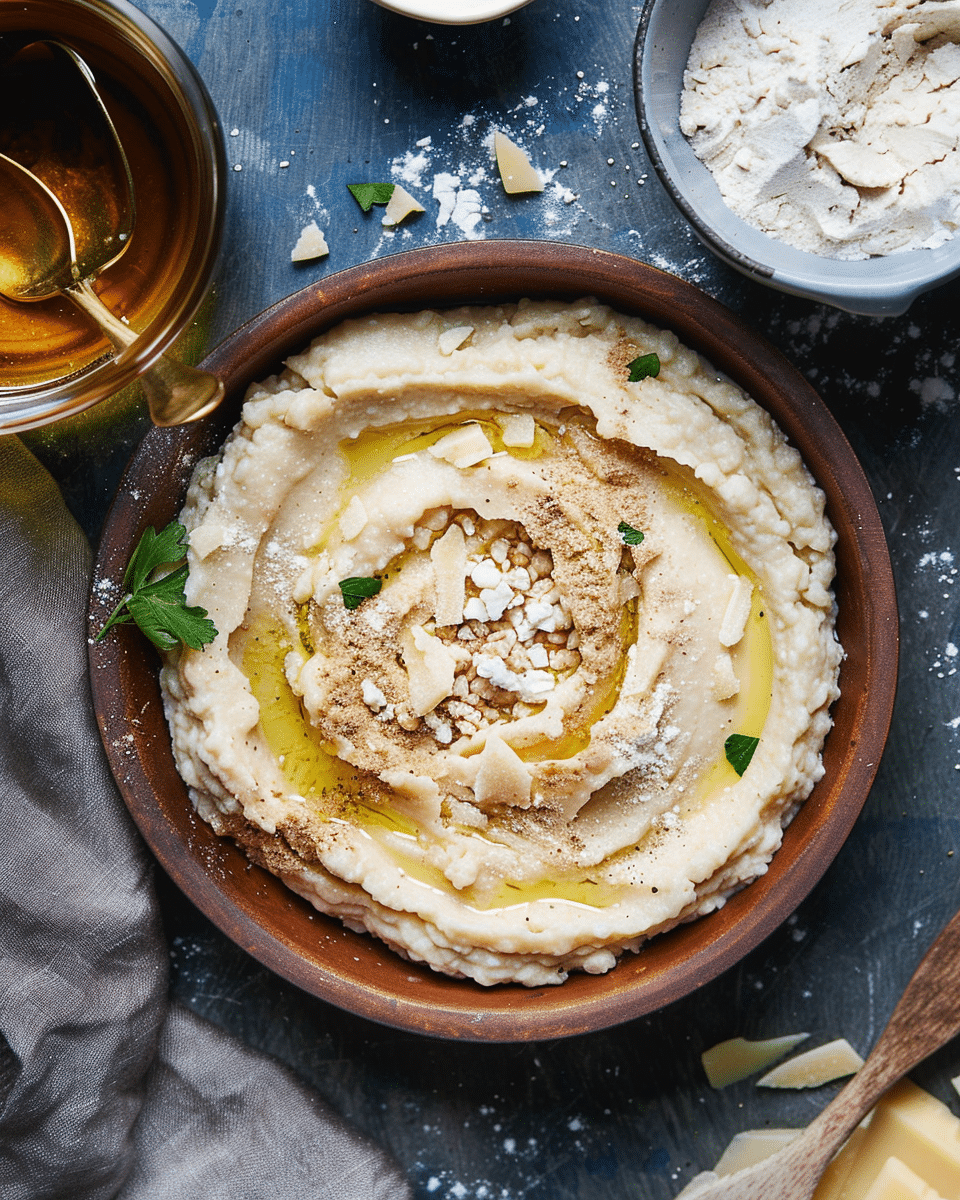
I enjoy how quickly this recipe comes together with just a handful of ingredients. I like that it’s naturally dairy-free, wonderfully garlicky, and easy to adjust to my taste. I appreciate how versatile it is — I can pair it with pita, veggies, grilled meats, or even use it as a flavorful spread. It’s the kind of recipe that feels rustic yet elegant at the same time.
Ingredients
(Note: All ingredient amounts are listed in the recipe card below.)
1/2 lb. russet potatoes, peeled, cut into 2″ pieces Kosher salt 1/2 cup walnuts, plus more, chopped, for serving 2 cloves garlic 3 Tbsp. fresh lemon juice 2 Tbsp. apple cider vinegar 1/2 cup extra-virgin olive oil, plus more for drizzling 2 Tbsp. chopped fresh parsley
Directions
I place the potatoes in a large pot, cover them with water, and season generously with salt. I bring them to a boil and cook until very soft, about 10–15 minutes. I drain them and let them cool.
Meanwhile, I add the walnuts to a food processor and grate the garlic directly over them. With the motor running, I drizzle in the lemon juice and vinegar and process until the nuts are finely ground.
I add the cooled potatoes and olive oil, then pulse until a thick, creamy spread forms. If the mixture feels too thick, I add a few splashes of water. I season with additional salt to taste.
I transfer the skordalia to a serving bowl, top with chopped parsley and extra walnuts, and give it a light drizzle of olive oil.
Servings and Timing
This recipe yields about 2 cups of skordalia. Prep takes around 10 minutes, and total time is approximately 25 minutes, including boiling and cooling the potatoes.
Variations
I sometimes replace half the walnuts with almonds for a slightly sweeter, milder flavor. I also enjoy adding roasted garlic for a deeper, softer garlic taste. If I want a smoother dip, I blend in a bit more olive oil or water. A touch of lemon zest can brighten the flavor wonderfully.
Storage/Reheating
I store leftovers in an airtight container in the refrigerator for up to three days. Before serving, I stir it well and sometimes add a small splash of water or olive oil to restore its creamy texture. This dip isn’t meant to be reheated; I serve it chilled or at room temperature.
FAQs
Can I make skordalia ahead of time?
Yes, I often prepare it a day in advance to let the flavors develop even more.
Why did my skordalia turn gluey?
This can happen if the potatoes are overmixed. I pulse gently to keep the texture creamy rather than elastic.
Can I use a different potato variety?
Yes, but I prefer russet potatoes because they mash smoothly and give the best consistency.
Can I make this without nuts?
Yes, I can replace the nuts with extra potato, bread soaked in water, or a mix of both.
Can I adjust the garlic level?
Absolutely. I add more or less depending on how strong I want the flavor.
Can I use bottled lemon juice?
Fresh lemon juice gives the best taste, but bottled works if that’s what I have.
How thick should the spread be?
I aim for a thick but easily scoopable consistency. I add water or oil if it feels too dense.
Can I use a blender instead of a food processor?
Yes, but I blend in short bursts to avoid overworking the potatoes.
What do I serve with skordalia?
I love pairing it with pita, vegetables, grilled fish, roasted meats, or even as a sandwich spread.
Conclusion
I love making this skordalia because it’s simple, vibrant, and incredibly versatile. The combination of soft potato, bright lemon, fragrant garlic, and earthy walnuts creates a dip that feels both traditional and timeless. Whether I serve it at gatherings or enjoy it as a snack, it always brings a little taste of Greece to my table.