I love how this recipe transforms familiar deviled eggs into something special without making the preparation complicated. The pumpkin puree adds color, creaminess, and mild earthy sweetness, while cream cheese gives the filling an especially rich and silky consistency.
I also like the balance of flavors. Dijon mustard and apple cider vinegar provide tanginess, smoked paprika adds warmth and smokiness, and the fried sage brings a fragrant, crispy finish. I find these eggs especially fitting for Thanksgiving, fall parties, holiday dinners, and seasonal appetizer spreads.
Another reason I enjoy this recipe is that I can prepare much of it ahead of time. Chilling the filling before assembly makes entertaining easier and also helps it firm up enough for neat piping.
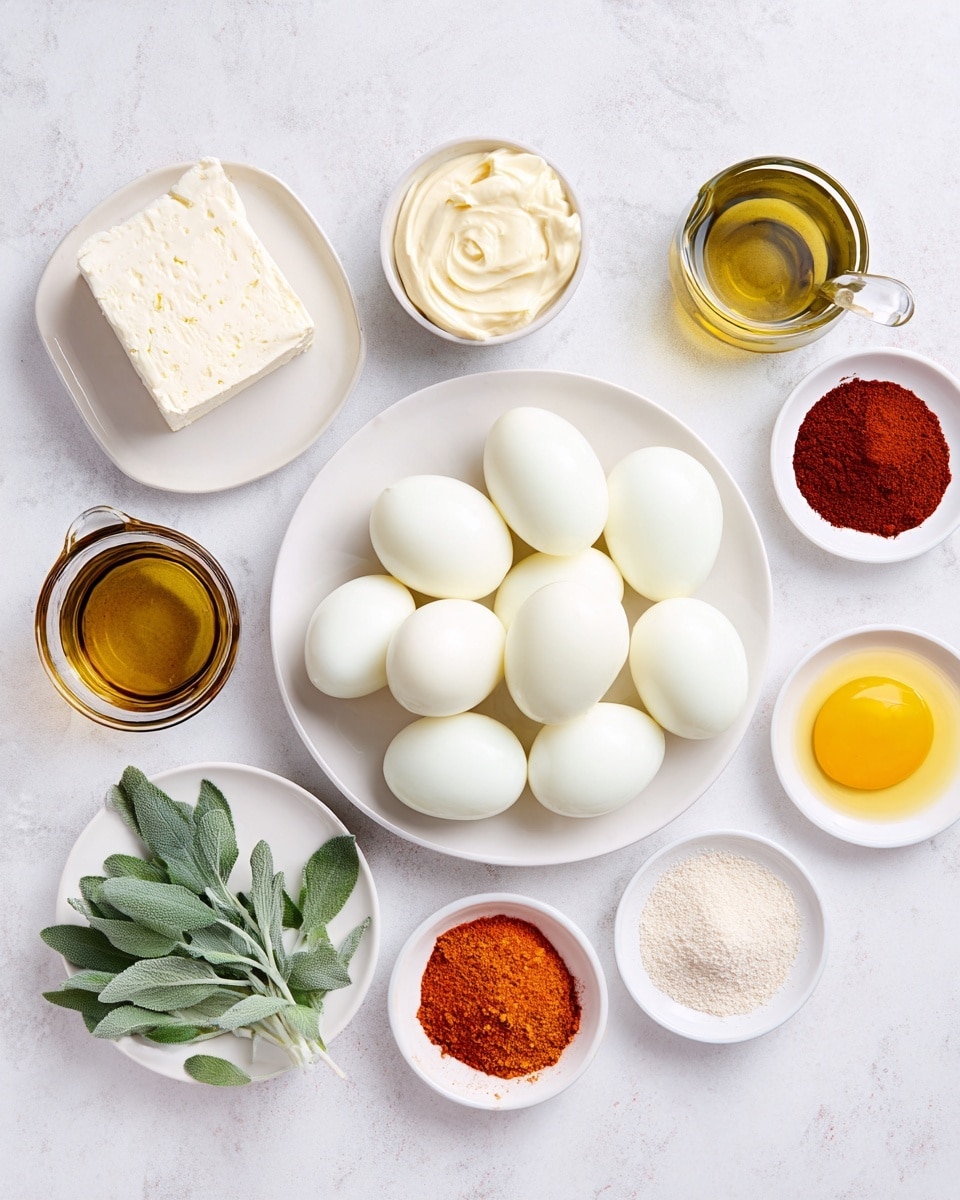
Ingredients
(Note: All ingredient amounts are listed in the recipe card below.)
Pumpkin Deviled Eggs:
12 hard boiled eggs , cooled and peeled
2 ounces cream cheese , softened
1/3 cup pumpkin puree
1/4 cup mayonnaise
1 tablespoon Dijon mustard
1 tablespoon smoked paprika
1 tablespoon apple cider vinegar
1/2 teaspoon coarse Kosher salt
1/4 teaspoon ground white pepper
Topping:
24 small fresh sage leaves or 12 large sage leaves hand torn in half
2 tablespoons olive oil , divided
smoked paprika , for sprinkling
Directions
Pumpkin Deviled Eggs
I cut each egg in half and pop out the yolk into a large mixing bowl or the bowl of a stand mixer fitted with a paddle attachment. I set the egg whites aside on a serving platter.
For an optional extra-smooth filling, I mash the yolks thoroughly with a fork or run them through a potato ricer.
I add the cream cheese and blend until smooth. Then I stir in the pumpkin puree, mayonnaise, Dijon mustard, smoked paprika, apple cider vinegar, salt, and pepper. I blend everything until the filling is smooth and evenly tinged orange.
I transfer the mixture to a large plastic bag or piping bag and chill it for at least 30 minutes before filling the egg white shells.
While the filling chills, I prepare the sage topping. I heat 1 tablespoon of the olive oil in a small frying pan over medium heat.
I fry 4-5 sage leaves at a time for about 30 seconds per leaf. I remove them before the edges begin to brown or curl and transfer them to a paper towel-lined plate.
I continue frying the remaining sage leaves. Once cooled, I keep them in an airtight container at room temperature until I am ready to assemble the eggs.
When I am ready to assemble, I snip the corner from the plastic bag, or use my piping bag, and fill each egg white well with the pumpkin filling.
I finish each deviled egg with one fried sage leaf and a hefty sprinkle of smoked paprika before serving.
Servings and Timing
This recipe makes 24 deviled egg halves, using 12 hard boiled eggs.
Prep Time: 20 minutes
Cook Time: 10 minutes
Chill Time: 30 minutes
Total Time: 1 hour
Servings: 24 eggs
I find this amount ideal for a party appetizer platter, especially when I am serving several other snacks or starters alongside the eggs.
Variations
Add a Little Heat
I sometimes add a small amount of cayenne pepper or hot sauce to the filling when I want a spicy contrast to the creamy pumpkin. I start with a small amount so the heat does not overwhelm the other fall flavors.
Make Them Extra Smoky
When I want a deeper smoky flavor, I increase the smoked paprika slightly or add another light dusting immediately before serving. I find the smoky seasoning pairs particularly well with the earthy pumpkin and sage.
Add Fresh Herbs
I can mix finely chopped fresh chives or parsley into the filling for a fresher, herbaceous note. I still use the fried sage on top because I like its crisp texture and seasonal appearance.
Try a Different Mustard
I can replace Dijon mustard with a whole-grain or spicy brown mustard when I want a slightly different flavor profile. I keep in mind that whole-grain mustard will give the filling more texture.
Change the Garnish
When I do not want to fry sage leaves, I can garnish the eggs with finely chopped fresh herbs or simply finish them with smoked paprika. I find the sage gives the recipe its most distinctive fall presentation, but the eggs are still flavorful without it.
Storage/Reheating
I store leftover Pumpkin Deviled Eggs in an airtight container in the refrigerator. Because they contain cooked eggs, mayonnaise, cream cheese, and pumpkin puree, I keep them chilled whenever I am not actively serving them. For the best flavor and texture, I prefer eating them within 2 to 3 days.
If I am preparing the recipe ahead, I like storing the egg whites and filling separately. I keep the filling refrigerated in an airtight container or piping bag and assemble the eggs closer to serving time. This helps the egg whites maintain a better texture and keeps the presentation fresh.
I store the fried sage separately in an airtight container at room temperature once it has cooled completely. I add it just before serving so it remains as crisp as possible.
I do not reheat these deviled eggs. I serve them chilled or allow them to sit briefly after removing them from the refrigerator. I also avoid freezing them because freezing can negatively affect the texture of both the cooked egg whites and creamy filling.
FAQs
Can I make Pumpkin Deviled Eggs ahead of time?
Yes. I like preparing the components ahead and keeping them refrigerated until I need them. For the neatest presentation, I store the filling separately from the egg whites and pipe it into the eggs closer to serving time. I add the crispy sage at the last moment.
Do these deviled eggs taste strongly like pumpkin?
I find that the pumpkin flavor is relatively subtle because the puree is combined with egg yolks, cream cheese, mayonnaise, mustard, vinegar, and smoked paprika. It contributes creaminess, color, and an earthy fall flavor without turning the eggs into a sweet appetizer.
Can I use pumpkin pie filling instead of pumpkin puree?
I use plain pumpkin puree for this recipe. Pumpkin pie filling usually contains sweeteners and spices intended for desserts, so it can dramatically change the savory flavor of the deviled eggs.
How do I make the filling extra smooth?
I like running the cooked egg yolks through a potato ricer before adding the other ingredients. Thoroughly mashing them with a fork also works. I then blend the filling until there are no noticeable lumps before transferring it to the piping bag.
Why should I chill the filling before piping it?
I chill the filling for at least 30 minutes because it helps the mixture firm up. I find that chilled filling holds its shape better when piped and makes the finished deviled eggs look neater.
Can I make these without a piping bag?
Yes. I can use a large plastic bag and snip off one corner when I am ready to fill the eggs. If appearance is not a concern, I can also spoon the filling directly into the egg white halves.
What can I use instead of fried sage?
If I do not have fresh sage, I can keep the garnish simple with smoked paprika. I can also add finely chopped chives or parsley. I prefer fried sage when available because its crisp texture and aromatic flavor complement the pumpkin particularly well.
How do I keep fried sage crispy?
I let the fried sage drain and cool completely before placing it in an airtight container at room temperature. I keep it separate from the refrigerated deviled eggs and add it immediately before serving because moisture can quickly soften the leaves.
How long can I store leftover Pumpkin Deviled Eggs?
I prefer storing leftovers in an airtight container in the refrigerator and eating them within 2 to 3 days. I keep the eggs refrigerated rather than leaving them sitting at room temperature for extended periods.
Can I freeze Pumpkin Deviled Eggs?
I do not recommend freezing them. Cooked egg whites can become rubbery or watery after freezing and thawing, while the creamy filling may separate. I get a much better texture by making the eggs fresh or preparing them a short time in advance and refrigerating them.
Conclusion
Pumpkin Deviled Eggs give me an easy way to bring fall flavor to a classic party appetizer. The combination of creamy egg yolks, pumpkin puree, cream cheese, tangy Dijon mustard, smoky paprika, and apple cider vinegar creates a rich filling that feels familiar while still being distinctive.
I especially like finishing the eggs with crispy sage because it adds both texture and a seasonal touch. With a 30-minute chill and simple make-ahead options, I find these deviled eggs convenient enough for entertaining while still looking impressive on a Thanksgiving, holiday, or autumn appetizer table.
Pumpkin Deviled Eggs combine creamy egg yolks, pumpkin puree, cream cheese, Dijon mustard, and smoked paprika for a savory autumn twist on the classic appetizer. Crispy fried sage adds an aromatic, elegant finish perfect for Thanksgiving and fall gatherings.
Ingredients
12 hard boiled eggs, cooled and peeled
2 ounces cream cheese, softened
1/3 cup pumpkin puree
1/4 cup mayonnaise
1 tablespoon Dijon mustard
1 tablespoon smoked paprika
1 tablespoon apple cider vinegar
1/2 teaspoon coarse Kosher salt
1/4 teaspoon ground white pepper
24 small fresh sage leaves or 12 large sage leaves, hand torn in half
2 tablespoons olive oil, divided
Smoked paprika, for sprinkling
Instructions
Cut each hard boiled egg in half lengthwise. Remove the yolks and place them in a large mixing bowl or the bowl of a stand mixer fitted with a paddle attachment. Arrange the egg whites on a serving platter.
For an extra-smooth filling, thoroughly mash the yolks with a fork or pass them through a potato ricer.
Add the softened cream cheese and blend until smooth. Add the pumpkin puree, mayonnaise, Dijon mustard, smoked paprika, apple cider vinegar, salt, and white pepper. Blend until creamy, smooth, and evenly orange.
Transfer the filling to a large plastic bag or piping bag and refrigerate for at least 30 minutes to firm.
While the filling chills, heat 1 tablespoon olive oil in a small frying pan over medium heat.
Fry 4 to 5 sage leaves at a time for about 30 seconds per leaf, removing them before the edges begin to brown or curl. Transfer to a paper towel-lined plate to drain.
Continue frying the remaining sage leaves, adding more of the reserved olive oil as needed. Allow the sage to cool completely.
When ready to serve, snip a corner from the plastic bag or use the piping bag to generously fill each egg white half with the chilled pumpkin filling.
Top each deviled egg with one crispy sage leaf and a generous sprinkle of smoked paprika. Serve chilled.
Notes
Use plain pumpkin puree rather than sweetened pumpkin pie filling.
For extra heat, add a small amount of cayenne pepper or hot sauce to the filling.
Whole-grain or spicy brown mustard can be substituted for Dijon mustard for a different flavor and texture.
Finely chopped chives or parsley can be mixed into the filling or used instead of fried sage as a garnish.
For make-ahead preparation, refrigerate the filling and egg whites separately and assemble closer to serving time.
Store cooled fried sage separately in an airtight container at room temperature and add it just before serving to preserve its crisp texture.
Store leftover assembled deviled eggs in an airtight container in the refrigerator for 2 to 3 days.
Serve the deviled eggs chilled and do not reheat them.
Freezing is not recommended because the egg whites can become rubbery and the creamy filling may separate.