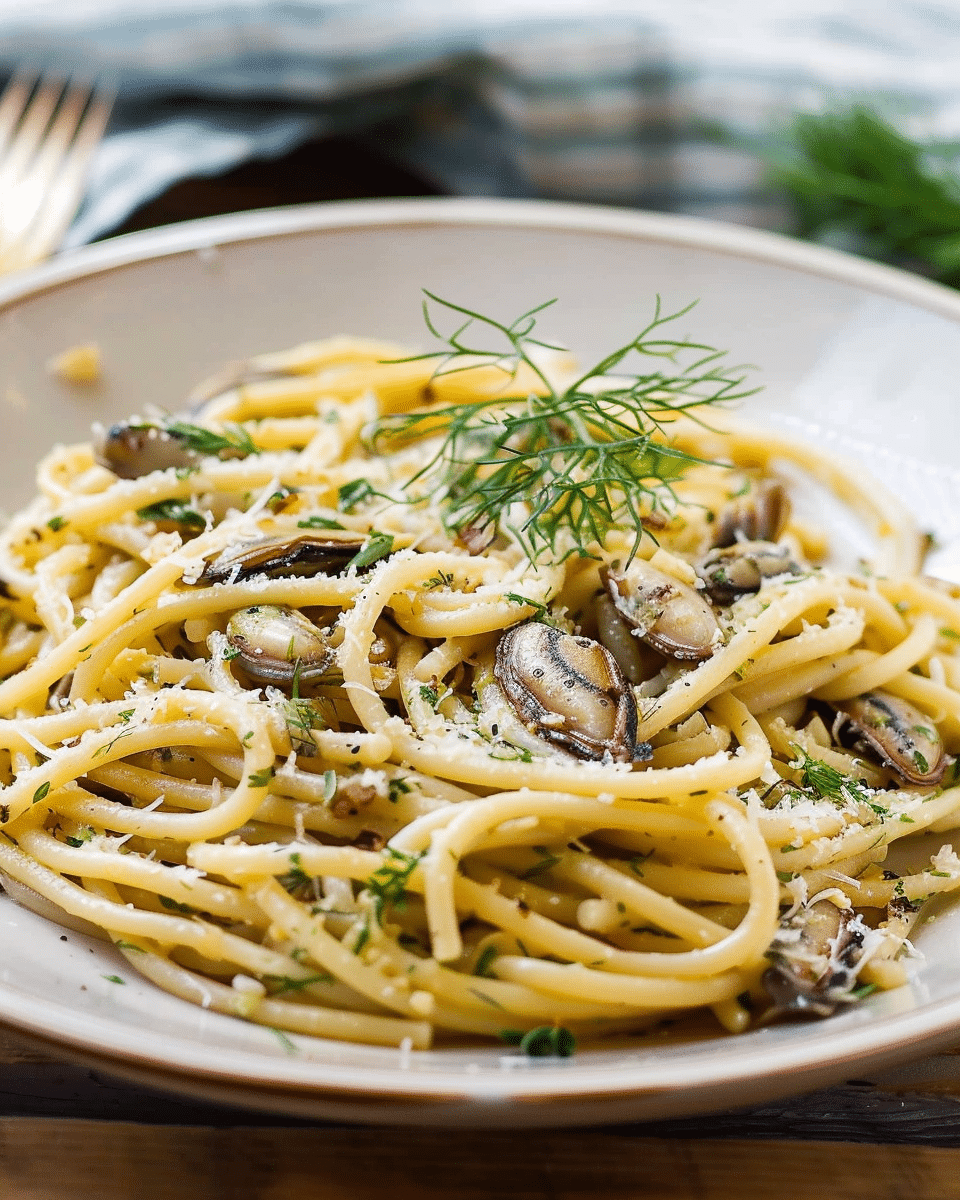
I love this recipe because it perfectly balances land and sea in a way that only Sicilian cooking can. The wild fennel adds a delicate herbal fragrance, the sardines bring a salty depth, and the pine nuts add just the right amount of richness. It’s simple to prepare yet feels incredibly special — a comforting, timeless dish that instantly transports me to the Sicilian coast.
Ingredients
(Note: All ingredient amounts are listed in the recipe card below.)
1 handful fresh wild fennel, roughly chopped 1 tsp salt 1 tsp freshly ground black pepper ¼ cup extra-virgin olive oil 1 red onion, finely chopped 5 anchovy fillets in oil 1 lb fresh sardines, scaled, cleaned, and filleted 2 tbsp pine nuts, toasted 1 tsp saffron threads 1 lb bucatini pasta
Directions
I start by bringing a large pot of water to a boil. I add the chopped fennel and boil it for about 20 minutes until tender and fragrant.
I remove the fennel and set it aside, keeping the cooking water for later. Once cooled slightly, I chop the fennel into 1-inch pieces.
In a large sauté pan, I pour in the olive oil and warm it over medium heat. I add the chopped onion and sauté for about 5 minutes until soft and translucent.
I stir in the anchovy fillets and let them melt into the oil — they add an incredible depth of flavor without overpowering the dish.
Next, I add the fresh sardines and two ladles of the reserved fennel water. I cook them gently, stirring occasionally, until they begin to break down.
I mix in the toasted pine nuts, saffron, salt, and pepper, letting the flavors blend for another 5 minutes.
I add the chopped fennel back into the pan along with two more ladles of fennel water, creating a thick, glossy sauce that clings beautifully to the pasta.
Meanwhile, I bring the reserved fennel water back to a boil, adding more water if needed and seasoning it well with salt.
I cook the bucatini until al dente, usually about 8 to 9 minutes.
I drain the pasta and toss it directly with the sardine and fennel sauce, making sure each strand is coated. I let it rest for a few minutes before serving so the flavors can meld together perfectly.
Servings and Timing
This recipe serves 5 people and takes about 10 minutes to prepare and 35 minutes to cook, for a total of 45 minutes.
Variations
I sometimes add a handful of golden raisins for a touch of sweetness that complements the sardines beautifully — a traditional Sicilian twist. Toasted breadcrumbs sprinkled on top give a lovely crunch. When I want a lighter version, I use spaghetti or linguine instead of bucatini. For a deeper flavor, I’ve also added a splash of lemon juice right before serving to brighten the sauce.
Storage/Reheating
I store any leftovers in an airtight container in the refrigerator for up to 2 days. To reheat, I warm the pasta in a skillet with a splash of olive oil or a bit of water to loosen the sauce. I don’t recommend freezing this dish, as the sardines and fennel lose their delicate texture once thawed.
FAQs
Can I use canned sardines instead of fresh?
Yes, I can — I just make sure to choose good-quality sardines in olive oil and add them near the end so they don’t break apart too much.
What if I can’t find wild fennel?
I use regular fennel fronds or even dill as a substitute; both give a pleasant, aromatic flavor.
Can I skip the anchovies?
I wouldn’t — they melt into the sauce and add a savory depth without a fishy taste.
What pasta works best besides bucatini?
Spaghetti, linguine, or even short pasta like rigatoni all work well.
How do I toast pine nuts properly?
I toast them in a dry skillet over medium heat for 2–3 minutes until golden and fragrant, shaking the pan often to prevent burning.
Is saffron essential?
While optional, saffron adds a subtle richness and beautiful color to the sauce that I really enjoy.
Can I make it spicy?
Yes, I sometimes add a pinch of red pepper flakes to the onion and anchovy mixture for gentle heat.
Can I make the sauce ahead of time?
Yes, I often prepare the sauce a few hours ahead and reheat it gently before tossing with the pasta.
How do I prevent the pasta from getting soggy?
I always cook it until just al dente and toss it immediately with the sauce so it absorbs flavor without overcooking.
Conclusion
I love how this bucatini with sardines and wild fennel brings the spirit of Sicily to my table. The sweetness of the onions, the briny sardines, the aromatic fennel, and the nutty pine nuts blend together in perfect harmony. Every forkful feels like a trip to the Mediterranean — warm, comforting, and full of life. It’s a dish that celebrates simplicity and the incredible flavors of Italy’s coastal cuisine.
A traditional Sicilian pasta dish featuring wild fennel, fresh sardines, anchovies, saffron, and toasted pine nuts, creating a fragrant, savory, and deeply Mediterranean flavor.
Ingredients
1 handful fresh wild fennel, roughly chopped
1 tsp salt
1 tsp freshly ground black pepper
1/4 cup extra-virgin olive oil
1 red onion, finely chopped
5 anchovy fillets in oil
1 lb fresh sardines, cleaned and filleted
2 tbsp pine nuts, toasted
1 tsp saffron threads
1 lb bucatini pasta
Instructions
Bring a large pot of water to a boil. Add chopped fennel and boil for 20 minutes until tender. Remove fennel and set aside, reserving the cooking water.
Chop the cooled fennel into 1-inch pieces.
Heat olive oil in a large sauté pan over medium heat. Add the onion and sauté for about 5 minutes until soft.
Stir in the anchovy fillets until melted into the oil.
Add the sardines and two ladles of fennel water. Cook gently, stirring occasionally, until the sardines begin to break down.
Mix in pine nuts, saffron, salt, and pepper. Cook for another 5 minutes.
Add the chopped fennel and two more ladles of fennel water, forming a glossy sauce.
Bring the reserved fennel water back to a boil, adding more water and salt as needed.
Cook the bucatini until al dente, about 8–9 minutes.
Drain the pasta and toss with the sardine-fennel sauce. Let rest for a few minutes before serving.
Notes
Add golden raisins for a traditional sweet contrast.
Top with toasted breadcrumbs for crunch.
Use spaghetti or linguine for a lighter variation.