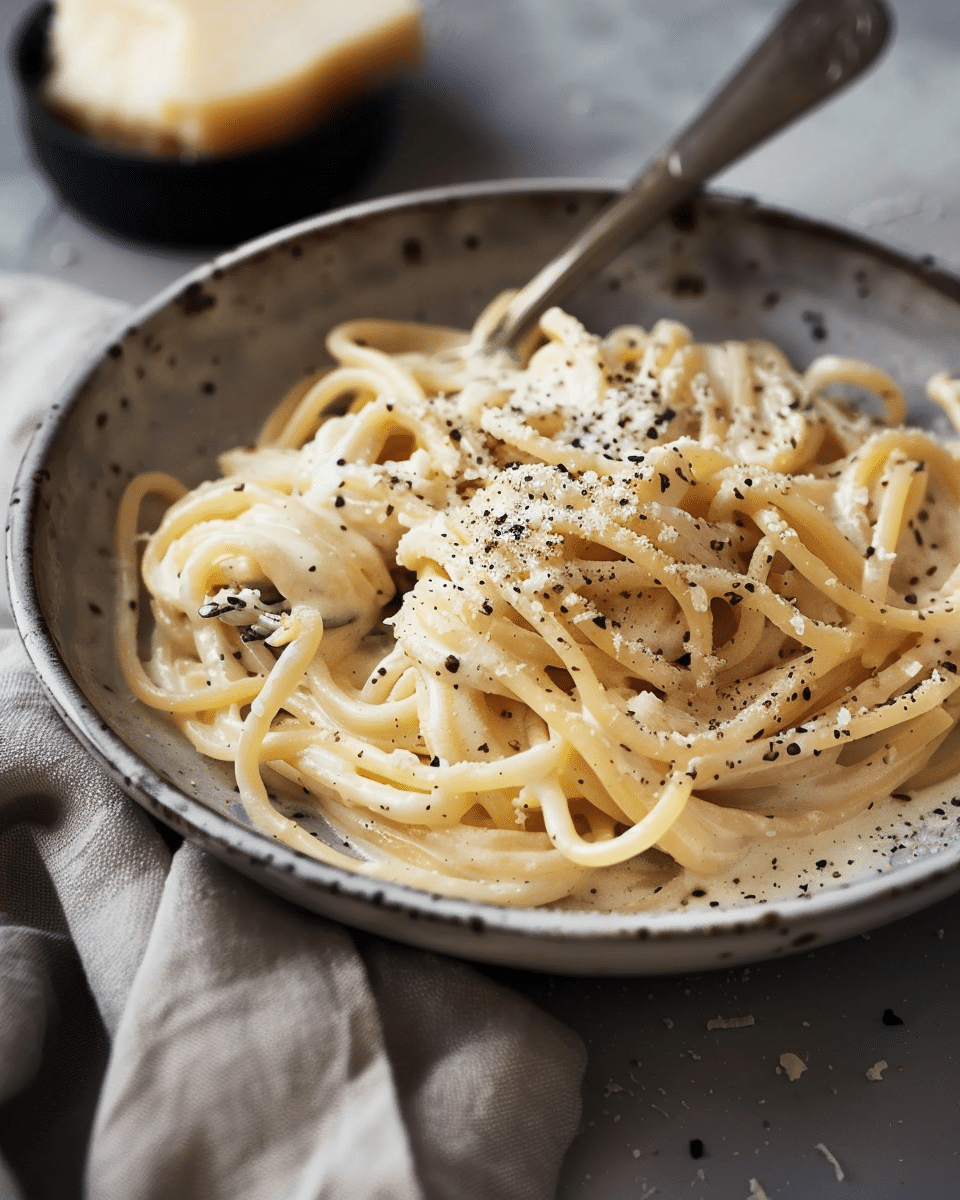
I love this dish because it’s fast, comforting, and relies entirely on pantry staples. There’s no need for cream or butter — the magic happens when the cheese melts with the starchy pasta water to form a silky sauce. It’s perfect for busy weeknights, yet elegant enough to serve when I want something special without much effort. Every bite is creamy, peppery, and irresistibly good.
Ingredients
(Note: All ingredient amounts are listed in the recipe card below.)
320 grams (0.71 lb) spaghetti 1 tablespoon whole black peppercorns (1 to 2 tablespoons) 200 grams (2 cups) Pecorino Romano, grated, plus more for serving
Directions
I bring a large pot of salted water to a boil, then add the spaghetti and cook it until it’s very al dente. I reserve 4 cups of the starchy cooking water before draining the pasta.
While the pasta cooks, I grind the whole peppercorns using a mortar and pestle. Freshly ground pepper gives the dish its signature aroma.
I place the grated Pecorino Romano in a bowl and mix in 1 tablespoon of lukewarm water to help create a smooth paste that blends easily later.
In a large pan, I toast the ground pepper over medium–high heat for about 30 seconds to release its flavor. I add one ladle of pasta water and let it boil for 2 minutes.
I add the slightly undercooked pasta to the pan and pour in enough reserved pasta water to continue cooking it gently. I add more water as needed until the pasta becomes creamy and perfectly al dente.
I turn off the heat and stir in the Pecorino paste, tossing everything together until the sauce becomes velvety. If the pasta looks dry, I simply add a splash more pasta water.
I serve the cacio e pepe immediately with extra Pecorino and freshly ground black pepper on top.
Servings and Timing
This recipe makes 4 servings. Preparation takes about 10 minutes, cooking takes 10 minutes, making the total time around 20 minutes.
Variations
Sometimes I use tonnarelli or rigatoni for a slightly different texture, though I prefer spaghetti for the most traditional result. When I want a softer flavor, I blend in a little Parmigiano Reggiano with the Pecorino. I also occasionally add a touch more pepper for extra heat or use mixed peppercorns for a more aromatic twist.
Storage/Reheating
Cacio e pepe is best enjoyed immediately, but if I have leftovers, I store them in an airtight container for up to 2 days. When reheating, I add a splash of hot water and warm it gently on the stove, stirring constantly to bring the sauce back together. A quick microwave reheat works too, but the stovetop gives the best texture.
FAQs
Why did my sauce turn grainy?
I prevent this by using lukewarm water to soften the cheese first and mixing it in off the heat.
Can I use Parmesan instead of Pecorino?
I prefer Pecorino for its sharp flavor, but Parmesan works in a pinch.
How do I make it extra creamy?
I use plenty of starchy pasta water and toss vigorously to emulsify the sauce.
Can I make this without freshly grinding peppercorns?
Yes, but freshly ground pepper gives a stronger, more fragrant flavor.
What type of pasta is best?
I like spaghetti best, as it holds the sauce without absorbing it too quickly.
Can I use pre-grated cheese?
I avoid it because it often contains anti-caking agents that prevent proper melting.
How salty should the pasta water be?
I salt it lightly since Pecorino adds plenty of saltiness.
How do I stop the cheese from clumping?
I make sure the pasta isn’t too hot and add the Pecorino paste off the heat.
Can I add butter or cream?
I keep it traditional and skip both — the sauce becomes creamy without them.
What can I serve with cacio e pepe?
I love pairing it with a simple green salad or roasted vegetables to balance the richness.
Conclusion
I love making Pasta Cacio e Pepe because it shows how a few simple ingredients can become something incredibly delicious. The creamy Pecorino sauce and warm pepper create a beautifully balanced dish that’s quick, elegant, and deeply satisfying. Whenever I need a fast yet comforting meal, this classic Roman pasta never disappoints.
This Pasta Cacio e Pepe is a classic Roman dish made with just spaghetti, Pecorino Romano, and black pepper. It’s creamy, peppery, and deeply flavorful — proof that simple ingredients can create an extraordinary meal in minutes.
Ingredients
320 g (0.71 lb) spaghetti
1–2 tbsp whole black peppercorns
200 g (2 cups) Pecorino Romano, finely grated, plus extra for serving
Salt, for pasta water
Instructions
Bring a large pot of salted water to a boil. Add the spaghetti and cook until very al dente. Reserve 4 cups of the starchy pasta water before draining.
Grind the black peppercorns coarsely using a mortar and pestle.
In a bowl, mix the grated Pecorino Romano with 1 tbsp lukewarm water to form a smooth paste. Set aside.
In a large skillet over medium–high heat, toast the ground pepper for 30 seconds to release its aroma.
Add one ladle of pasta water to the pan and let it simmer for 2 minutes.
Add the al dente pasta to the skillet and toss, gradually adding more pasta water as needed, until the pasta is perfectly cooked and lightly coated in a starchy liquid.
Remove the pan from the heat and quickly stir in the Pecorino paste, tossing until the sauce turns smooth and creamy. Add a splash more pasta water if needed.
Serve immediately, topped with extra Pecorino Romano and freshly ground black pepper.
Notes
Use freshly ground black pepper for the best flavor.
Combine Pecorino Romano with a little Parmigiano Reggiano for a milder taste.
If the cheese clumps, add it off the heat and loosen the sauce with extra pasta water.
Use tonnarelli, bucatini, or rigatoni for variations in texture.
Cacio e pepe is best served immediately but can be reheated with a splash of hot water.