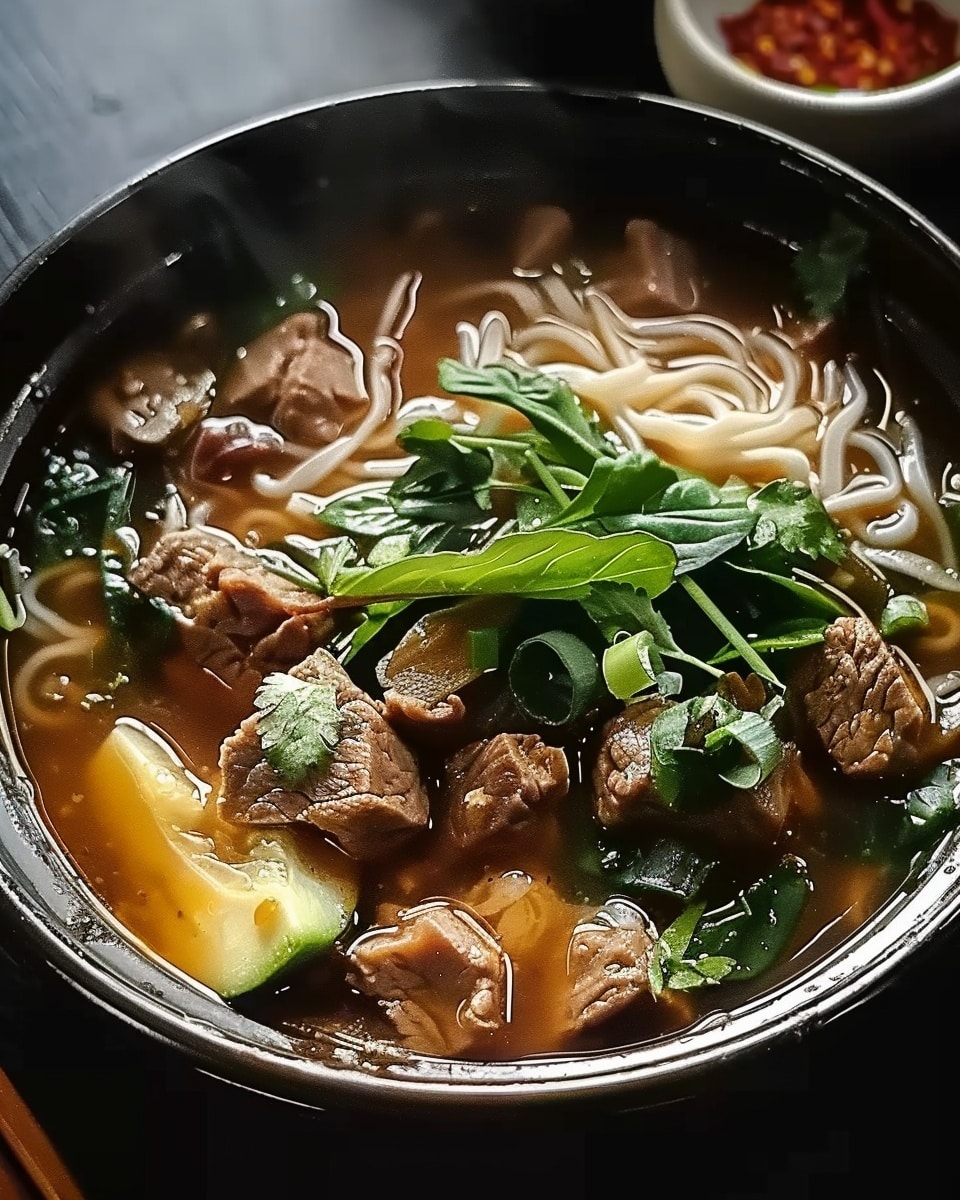
I love this recipe because it delivers big, restaurant-style flavor using simple, approachable steps. I can customize the protein depending on what I have on hand, and the broth develops a rich, layered taste without feeling heavy. I also enjoy how this recipe feels both comforting and special, perfect for a cozy weekend or when I want something deeply nourishing.
Ingredients
(Note: All ingredient amounts are listed in the recipe card below.)
For the Broth:
1 tablespoon vegetable oil: For sautéing the spices and onions. 1 large onion: Quartered, for flavoring the broth. 1 piece ginger (about 3 inches): Sliced, to infuse the broth with a warm, aromatic spice. 4 cloves garlic: Crushed, to add a savory depth. 2 cinnamon sticks: A key component in adding depth to the broth. 4 star anise: Provides a sweet and slightly licorice-like flavor. 4 cloves: Adds warmth and complexity to the broth. 1 tablespoon coriander seeds: For an earthy, citrusy undertone. 2 tablespoons fish sauce: For a salty, umami flavor. 6 cups water or low-sodium beef/chicken broth: The liquid base of the soup. 1 tablespoon sugar: Balances the savory and sweet flavors. 1 tablespoon salt: To season the broth to taste. 1 tablespoon soy sauce: Adds a rich, savory flavor to complement the fish sauce.
For the Meat:
1 pound beef brisket, chicken breast, or lamb shank: Thinly sliced against the grain (beef and lamb are traditional, but chicken offers a lighter option). 1 tablespoon soy sauce: For marinating the meat and enhancing flavor. 1 tablespoon rice vinegar: To help tenderize the meat. 1 teaspoon ground black pepper: Adds a subtle heat and depth.
Noodles:
8 oz rice noodles (Bánh Phở): Thin, flat rice noodles that are the foundation of Pho. 1 tablespoon vegetable oil: To prevent the noodles from sticking.
Directions
I start by heating the vegetable oil in a large pot over medium heat, then add the quartered onion and sliced ginger. I sauté them for about 5–7 minutes until fragrant and slightly softened. Next, I add the cinnamon sticks, star anise, cloves, and coriander seeds, stirring constantly for 1–2 minutes to toast the spices and release their aromas.
I pour in the water or broth, then stir in the fish sauce, soy sauce, sugar, and salt. Once everything comes to a gentle simmer, I lower the heat and let the broth cook for about an hour, skimming any impurities that rise to the surface. After simmering, I strain the broth into a clean pot and keep it warm over low heat.
For the meat, I thinly slice it and toss it with soy sauce, rice vinegar, and black pepper. I let it marinate for 15–20 minutes before adding it to the hot broth. I simmer chicken briefly until just cooked, or let beef or lamb cook longer until tender.
While the meat cooks, I boil the rice noodles according to package instructions, drain them, rinse with cold water, and toss them with vegetable oil. To serve, I divide the noodles into bowls, ladle the hot broth and meat over them, and finish with my favorite garnishes before serving hot.
Servings and Timing
I usually make this recipe to serve about 4 people. Prep time takes me around 30 minutes, with a cook time of about 1 hour and 30 minutes, bringing the total time close to 2 hours.
Variations
I sometimes switch proteins depending on my mood, using chicken for a lighter broth or lamb for a richer flavor. When I want a vegetarian version, I replace the meat with mushrooms and use vegetable broth while skipping the fish sauce. I also like adding extra spices like cardamom or fennel seeds when I want a slightly different aromatic profile.
Storage/Reheating
I store the broth and noodles separately in airtight containers in the refrigerator for up to 3 days. When reheating, I gently warm the broth on the stove and briefly reheat the noodles in hot water before assembling the bowls. This keeps the texture fresh and prevents sogginess.
FAQs
Can I make the broth ahead of time?
I often prepare the broth a day in advance because the flavors deepen beautifully overnight.
What meat works best for this recipe?
I like beef brisket for traditional richness, but chicken breast works well for a lighter option.
Can I freeze the broth?
I freeze the strained broth in airtight containers for up to 2 months with great results.
Do I have to strain the broth?
I always strain it to achieve a clear, clean-tasting broth, which makes a big difference.
How do I keep the noodles from sticking?
I toss them with vegetable oil after cooking, which keeps them separate and smooth.
Is this recipe spicy?
I find it mild as written, but I add chili peppers or sauce when I want extra heat.
Can I use dried spices instead of whole?
I prefer whole spices for depth, but ground spices can work in a pinch with careful measuring.
What garnishes work best?
I love fresh herbs, lime wedges, bean sprouts, and sliced chili for balance and freshness.
Can I use store-bought broth?
I use low-sodium store-bought broth when short on time, adjusting seasoning as needed.
How do I adjust the saltiness?
I taste near the end and add fish sauce or salt gradually until it tastes right to me.
Conclusion
This Pot Pho is one of my favorite comfort meals because it combines slow-simmered warmth with fresh, vibrant toppings. I enjoy how customizable it is and how each bowl feels nourishing and deeply satisfying, making it a recipe I come back to again and again.
A comforting pot of slow-simmered pho with an aromatic, spice-infused broth, tender meat, and silky rice noodles, delivering deep, restaurant-style flavor in a nourishing homemade bowl.