Why You’ll Love Homemade Sourdough Baguettes – Crispy, Golden, and Delicious Recipe
Simple ingredients: I only need four basic ingredients.
Crispy crust: I love the golden, crunchy exterior.
Soft interior: The bread has a light, chewy texture.
Naturally fermented: I use active sourdough starter instead of commercial yeast.
Versatile: I enjoy serving these baguettes with soups, salads, and sandwiches.
Homemade flavor: I love the fresh aroma and taste of bread straight from my oven.
Ingredients
(Note: All ingredient amounts are listed in the recipe card below.)
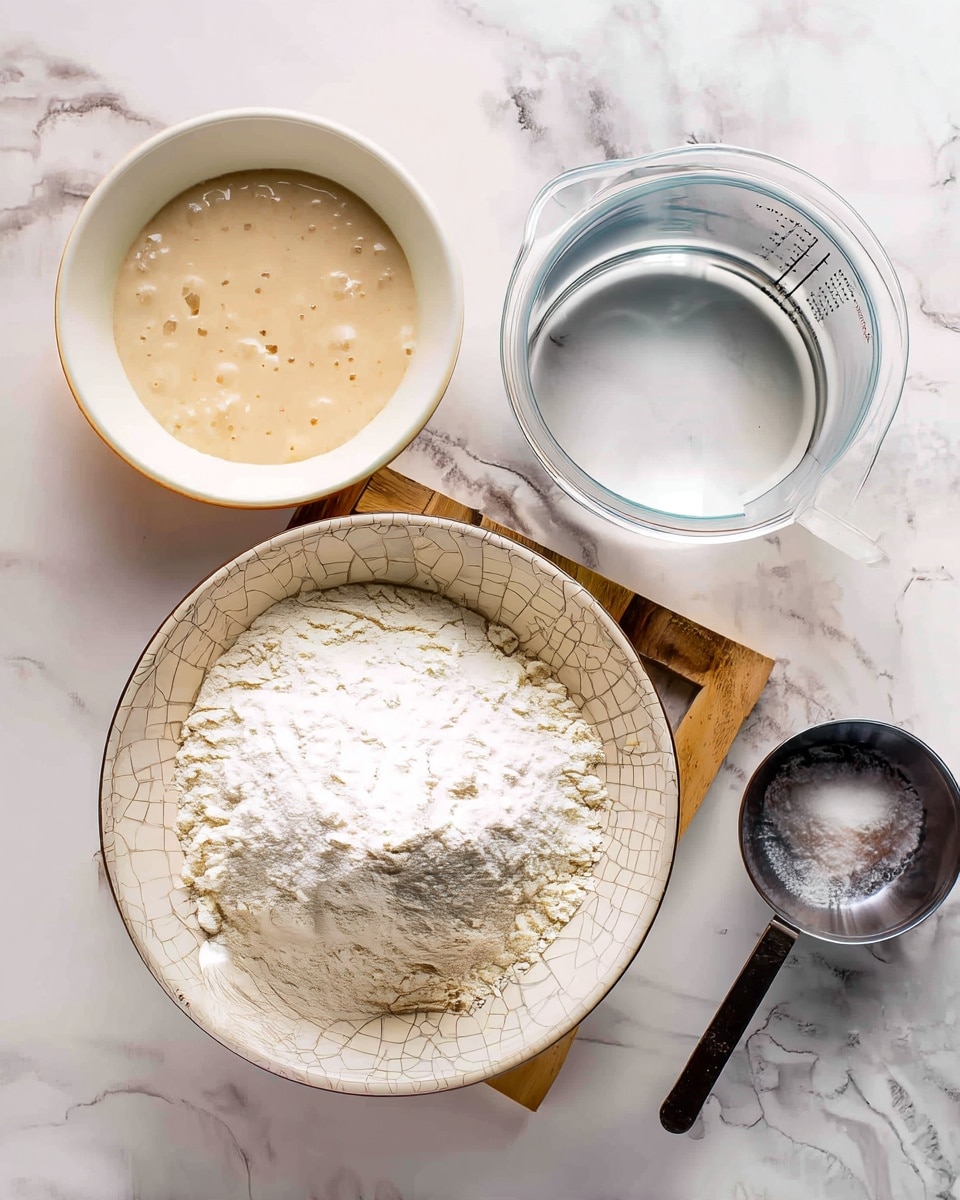
3 1/4 C High Protein AP Flour or Bread Flour (400g)
1 C Sourdough Starter (200g)
1 C Water (250g)
1 3/4 Tsp Fine Sea Salt (9g)
Directions
Step 1: Mix the Dough
I combine the sourdough starter, flour, salt, and water in a large mixing bowl. I stir until a shaggy dough forms, then cover it with a towel and let it rest for 20–30 minutes.
Step 2: Knead and Rise
I knead the dough for 5–10 minutes until smooth. I shape it into a ball, place it in a lightly oiled bowl if desired, and cover it. I let it rise in a warm place for 2–4 hours or until doubled.
Step 3: Fold the Dough
I transfer the dough to a floured surface, flatten it into a rectangle, and fold it into thirds. I pinch the ends closed, return it to the bowl, and let it rise for 30 minutes. I repeat the folding and resting process once more.
Step 4: Shape the Baguettes
I divide the dough into 3–4 portions and shape each into a long baguette. I place them on parchment paper, cover with a damp towel, and let them rise for approximately 30 minutes.
Step 5: Preheat the Oven
I preheat my oven to 450°F (230°C), placing a heavy baking sheet on the middle rack and an oven-safe rimmed pan underneath.
Step 6: Score and Bake
I slash the tops of the baguettes with a sharp knife and lightly spray them with water. I transfer them onto the hot baking sheet, add a cup of ice cubes to the lower pan, and close the oven.
I reduce the temperature to 400°F (200°C) and bake for about 20 minutes, adding a few extra minutes until the crust is golden brown.
Step 7: Cool and Serve
I transfer the baguettes to a wire rack and let them cool before slicing. I enjoy them fresh with butter, cheese, or my favorite spreads.
Servings and Timing
Prep Time: 20 minutes
Cook Time: 30 minutes
Rising Time: 4 hours
Total Time: 5 hours
Yield: 4 demi baguettes
Course: Bread
Cuisine: French
I allow extra time when my kitchen is cooler because sourdough fermentation depends on temperature and starter activity.
Variations
Whole Wheat Sourdough Baguettes
I replace a portion of the bread flour with whole wheat flour for a nuttier flavor.
Garlic Herb Baguettes
I add dried herbs or roasted garlic to the dough for a savory twist.
Seeded Sourdough Baguettes
I sprinkle sesame, poppy, or sunflower seeds over the shaped loaves before baking.
Rosemary Sourdough Baguettes
I mix finely chopped rosemary into the dough for a fragrant, rustic bread.
Mini Sourdough Baguettes
I divide the dough into smaller portions to make individual sandwich rolls.
Storage/Reheating
Room Temperature: I store cooled baguettes in a paper bag or bread box for up to 2 days.
Freezer: I wrap the baguettes tightly and freeze them for up to 3 months.
Oven: I reheat baguettes at 350°F (175°C) for 5–10 minutes to restore their crispy crust.
Toaster: I toast individual slices until warm and golden.
I avoid refrigerating baguettes because refrigeration makes bread stale faster.
FAQs
1. Can I Use All-Purpose Flour Instead of Bread Flour?
Yes, I use high-protein all-purpose flour, although bread flour usually provides better structure and chewiness.
2. How Do I Know My Sourdough Starter Is Ready?
I use a recently fed starter that is bubbly, active, and has risen noticeably.
3. Why Didn’t My Baguettes Rise Properly?
I check my starter’s activity, dough temperature, and rising time because these factors affect fermentation.
4. Can I Make the Dough Ahead of Time?
Yes, I can refrigerate the dough overnight after beginning fermentation and continue shaping the next day.
5. How Do I Get a Crispy Crust?
I use a hot oven and steam during the first part of baking to develop a crisp, golden crust.
6. Why Are My Baguettes Dense?
I make sure the dough has risen sufficiently and avoid adding too much flour while kneading.
7. Can I Bake Without a Baguette Pan?
Yes, I bake my baguettes on a preheated baking sheet lined with parchment paper.
8. How Do I Know When the Baguettes Are Done?
I look for a deep golden crust and a hollow sound when tapping the bottom.
9. Can I Freeze Homemade Sourdough Baguettes?
Yes, I freeze them after cooling completely and reheat them in the oven when needed.
10. What Can I Serve with Sourdough Baguettes?
I love serving them with soups, salads, cheese, butter, or using them for sandwiches.
Conclusion
Homemade Sourdough Baguettes are a wonderful way to enjoy fresh, bakery-style bread at home. I love their crispy golden crust, chewy interior, and naturally tangy flavor. With four simple ingredients and a little patience, I can create delicious baguettes that make any meal feel special.
Homemade Sourdough Baguettes are crusty, golden French-style breads with a soft, airy interior and a deliciously tangy flavor. Made with just four simple ingredients and naturally fermented sourdough starter, these artisan baguettes are perfect for sandwiches, soups, salads, or serving warm with butter.
Mix the dough: In a large mixing bowl, combine the active sourdough starter, flour, fine sea salt, and water. Stir with a wooden spoon or dough whisk until all the flour is incorporated and a shaggy, slightly sticky dough forms. Cover the bowl with a clean kitchen towel and allow the dough to rest for 20–30 minutes.
Knead the dough: Transfer the rested dough to a lightly floured work surface. Knead for approximately 5–10 minutes until the dough becomes smooth, elastic, and cohesive. Avoid adding excessive flour, as the dough should remain slightly tacky.
First rise: Shape the dough into a ball and transfer it to a clean bowl, lightly greased if desired. Cover with plastic wrap or a damp kitchen towel. Allow the dough to rise in a warm, draft-free location for approximately 2–4 hours, or until noticeably expanded and approximately doubled in size. Rising time will vary depending on room temperature and sourdough starter activity.
Perform the first fold: Gently transfer the risen dough to a lightly floured work surface. Flatten it into a rectangle without pressing out all the air. Fold one-third of the dough toward the center, then fold the opposite third over it, similar to folding a letter. Gently pinch the ends closed and return the dough to the bowl. Cover and rest for 30 minutes.
Perform the second fold: Repeat the folding process once more to strengthen the dough and improve its structure. Return the dough to the bowl, cover, and allow it to rest for another 30 minutes.
Divide the dough: Transfer the dough to a lightly floured surface and divide it into 4 equal portions for demi baguettes, or 3 portions for slightly larger baguettes. Handle the dough gently to preserve the air developed during fermentation.
Shape the baguettes: Flatten each portion into a small rectangle. Fold the long edges toward the center, pressing gently to seal, then roll the dough into a long, narrow baguette shape. Use your hands to gently lengthen each piece, tapering the ends slightly. Place the shaped baguettes seam-side down on parchment paper, leaving space between them.
Final rise: Cover the shaped baguettes loosely with a damp kitchen towel and allow them to rise for approximately 30 minutes, or until slightly puffy. Avoid overproofing, which can cause the loaves to spread during baking.
Preheat the oven: Preheat the oven to 450°F (230°C). Place a heavy baking sheet on the middle rack and an oven-safe rimmed metal pan on a lower rack. Allow both pans to heat thoroughly before baking.
Score the baguettes: Using a sharp knife or bread lame, make several shallow diagonal slashes along the top of each baguette. Lightly spray the dough with water to encourage crust development.
Create steam and bake: Carefully transfer the baguettes with their parchment paper onto the preheated baking sheet. Add approximately 1 cup of ice cubes to the hot lower metal pan, taking care to avoid escaping steam. Immediately close the oven door and reduce the temperature to 400°F (200°C).
Bake until golden: Bake the baguettes for approximately 20 minutes, adding a few extra minutes if necessary, until the crust becomes deep golden brown and crisp. The baguettes should sound hollow when gently tapped on the bottom.
Cool the baguettes: Remove the baked baguettes from the oven and transfer them to a wire cooling rack. Allow them to cool before slicing so the interior crumb can finish setting.
Serve and enjoy: Slice the cooled sourdough baguettes and serve with butter, cheese, olive oil, spreads, soups, or salads. They are also delicious for homemade sandwiches and toasted garlic bread.
Notes
Active sourdough starter: Use a recently fed sourdough starter that is bubbly, active, and has risen noticeably. A strong starter is essential for proper fermentation and a light, airy crumb.
Starter hydration: This recipe assumes a 100% hydration sourdough starter, meaning equal weights of flour and water. Using a different hydration level may require adjusting the dough consistency.
Best flour: Bread flour generally produces better gluten development, structure, and chewiness. High-protein all-purpose flour is also suitable.
Dough hydration: The dough is relatively soft and slightly sticky. Avoid adding too much extra flour during kneading or shaping, as this can create dense baguettes.
Resting the dough: The initial 20–30-minute rest allows the flour to absorb water and makes the dough easier to knead.
Fermentation temperature: Sourdough rises faster in a warm kitchen and more slowly in a cool environment. Use the dough’s appearance and expansion rather than relying only on the clock.
Rising time: The first rise typically takes 2–4 hours, but additional time may be necessary depending on starter strength and room temperature.
Folding technique: Gentle folds strengthen the gluten network and improve dough structure without requiring excessive kneading.
Shaping tip: Handle the dough gently when dividing and shaping to preserve fermentation bubbles and encourage an airy interior.
Prevent spreading: Shape the baguettes with sufficient surface tension and avoid overproofing during the final rise.
Scoring tip: Use a very sharp knife or bread lame to create shallow diagonal cuts. Scoring allows the baguettes to expand evenly during baking.
Steam for a crispy crust: Introducing steam during the first part of baking helps the dough expand and develop a crisp, golden crust. Use a sturdy metal pan suitable for steam baking, and avoid glass or ceramic pans that may crack from thermal shock.
Steam safety: Keep your hands and face away from the oven opening when adding ice to the hot pan. Hot steam can cause burns.
Without a baguette pan: Bake the shaped baguettes on parchment paper placed over a preheated heavy baking sheet. A specialized baguette pan is not required.
Check for doneness: Properly baked baguettes should have a deep golden crust and sound hollow when tapped underneath. An internal temperature of approximately 205–210°F (96–99°C) is another useful indicator.
Whole wheat variation: Replace a portion of the bread flour with whole wheat flour for a nuttier flavor and heartier texture. Add a little extra water if the dough becomes too firm.
Garlic herb variation: Add dried herbs or finely chopped roasted garlic to the dough for a savory, aromatic twist.
Seeded baguettes: Sprinkle sesame seeds, poppy seeds, or sunflower seeds over the shaped loaves before baking. Lightly moisten the surface to help the seeds adhere.
Rosemary baguettes: Mix finely chopped fresh rosemary into the dough for a fragrant, rustic bread.
Mini baguettes: Divide the dough into smaller portions to create individual sandwich rolls. Reduce the baking time as needed and monitor the crust color.
Overnight fermentation: After beginning bulk fermentation, refrigerate the covered dough overnight for additional flavor development. Allow sufficient time for fermentation and shaping the following day.
Dense bread troubleshooting: Dense baguettes may result from an inactive starter, insufficient fermentation, excessive added flour, or rough shaping that removes too much trapped air.
Weak rise troubleshooting: Check that the starter is active, the dough is kept at a suitable temperature, and enough fermentation time is provided.
Cooling tip: Allow the baguettes to cool on a wire rack before slicing. Cutting too early can make the interior appear gummy.
Room-temperature storage: Store completely cooled baguettes in a paper bag or bread box for up to 2 days. The crust is best on the day of baking.
Avoid refrigeration: Refrigerating bread accelerates staling and can negatively affect the texture. Freeze baguettes for longer storage instead.
Freezing: Wrap fully cooled baguettes tightly in plastic wrap or aluminum foil and place in a freezer-safe bag. Freeze for up to 3 months.
Oven reheating: Reheat baguettes in a preheated 350°F (175°C) oven for approximately 5–10 minutes to restore their crisp crust.
Toasting: Toast individual baguette slices until warm and golden for sandwiches, crostini, or breakfast toast.
Serving suggestions: Enjoy with butter, cheese, olive oil, hummus, soups, salads, or use for sandwiches, bruschetta, and garlic bread.
Timing note: The estimated total time is approximately 5 hours, including preparation, fermentation, shaping, and baking. Actual timing may vary with starter activity, kitchen temperature, and cooling time.
Nutrition information: Nutritional values are estimates per demi baguette based on 4 equal baguettes made with 400 g flour, 200 g of 100% hydration sourdough starter, water, and salt. No optional toppings or spreads are included.
Prep Time:20 minutes
Cook Time:30 minutes
Category:Bread
Method:Baking
Cuisine:French
Nutrition
Serving Size:1 demi baguette (approximately 215 g baked)