Why You’ll Love Chinese Eggplant with Garlic Sauce Recipe
Chinese Eggplant with Garlic Sauce is a flavorful stir-fry made with tender eggplant, fresh garlic, ginger, and a rich, savory sauce. The eggplant is lightly seared instead of deep-fried, giving it a soft texture without excessive oil. I use soy sauce, oyster sauce, and sesame oil to create a balanced sweet and savory flavor. This restaurant-style dish takes just 40 minutes and works well for a weeknight dinner served with steamed rice.
Ingredients
(Note: All ingredient amounts are listed in the recipe card below.)
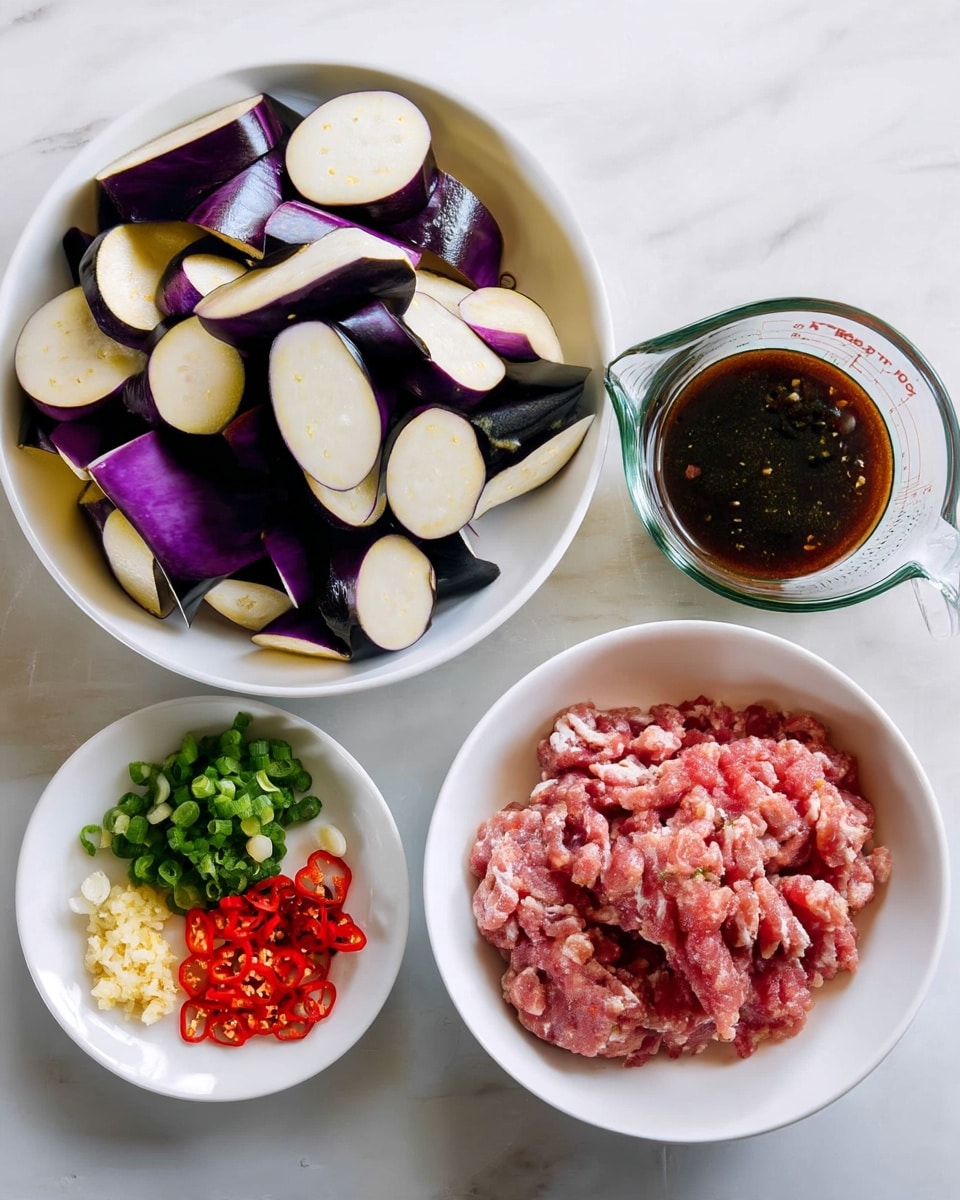
1 pound Chinese or Japanese eggplants (2–3 eggplants)
4½ tablespoons neutral oil (vegetable, canola, avocado, or peanut oil)
4 ounces ground chicken (optional)
2 teaspoons minced ginger
5–10 dried red chilies, deseeded and sliced into small pieces
2 scallions, chopped
Directions
1. Prepare the sauce: In a small bowl, I dissolve the sugar in hot water. I add the cornstarch, oyster sauce, rice vinegar, chicken broth, light soy sauce, sesame oil, dark soy sauce, white pepper, and 1 tablespoon of minced garlic. I stir until combined and set aside.
2. Cut the eggplant: I trim the ends of the eggplants and cut them diagonally into triangular, bite-sized pieces, rotating each eggplant between cuts. I prepare them just before cooking to prevent browning.
3. Heat the wok: I heat a wok over medium-high heat until lightly smoking, then add 1½ tablespoons of neutral oil around the sides to coat the surface.
4. Sear the eggplant: I spread the eggplant in a single layer, reduce the heat to medium, and cook for 3–4 minutes, turning occasionally until lightly browned.
5. Finish cooking the eggplant: I add another 1½ tablespoons of oil and continue cooking for about 4 minutes until the eggplant is tender, evenly seared, and slightly translucent. I cook in batches if necessary, then transfer it to a plate.
6. Cook the ground chicken: I increase the heat to high and add the remaining 1½ tablespoons of oil. If using ground chicken, I add it to the wok and cook, breaking it into small pieces, until fully cooked.
7. Add the aromatics: I stir in the ginger, dried red chilies, and remaining tablespoon of garlic. I cook for 1–2 minutes, stirring constantly until fragrant.
8. Combine the ingredients: I return the cooked eggplant to the wok and stir-fry briefly to combine it with the aromatics and chicken.
9. Thicken the sauce: I stir the prepared sauce again to redistribute the cornstarch, then pour it into the wok. I bring everything to a simmer and cook until the sauce thickens enough to coat a spoon.
10. Finish and serve: I stir in the chopped scallions and serve immediately, usually with steamed white rice.
Servings and Timing
Servings: 4
Prep Time: 15 minutes
Cook Time: 25 minutes
Total Time: 40 minutes
Variations
For a vegetarian version, I omit the ground chicken and use vegetarian oyster sauce. I can also adjust the number of dried red chilies to make the dish milder or spicier. Ground chicken adds extra protein, but the eggplant and garlic sauce are flavorful enough on their own. If Chinese eggplant isn’t available, I can use Japanese eggplant, which has a similarly tender texture.
Storage/Reheating
I let the eggplant cool before transferring it to an airtight container and refrigerating it for up to 3–4 days. To reheat, I warm it in a skillet over medium-low heat, stirring gently until heated through. I can add a small splash of water if the sauce becomes too thick. For longer storage, I can freeze the cooled dish in a freezer-safe container, although the eggplant may become softer after thawing.
FAQs
Can I use regular eggplant instead of Chinese eggplant?
Yes, regular globe eggplant can work, although it has a thicker skin and firmer texture. I cut it into smaller, evenly sized pieces and cook until tender.
Can I make Chinese Eggplant with Garlic Sauce vegetarian?
Yes, I omit the ground chicken and use vegetarian oyster sauce. The eggplant, garlic, and seasonings still create a flavorful dish.
Do I need to peel Chinese eggplant?
No, I leave the skin on because Chinese eggplant has thin, tender skin that softens during cooking. It also helps the pieces hold their shape.
How do I prevent eggplant from absorbing too much oil?
I heat the wok properly and cook the eggplant in a single layer. I also avoid overcrowding the pan so the pieces sear instead of steaming.
Can I make this recipe less spicy?
Yes, I reduce the number of dried red chilies or leave them out entirely. The garlic sauce remains flavorful without the extra heat.
Why is my garlic sauce too thin?
The sauce may need more time to simmer and thicken. I stir it before adding it to the wok so the cornstarch is evenly distributed.
Can I prepare the sauce ahead of time?
Yes, I can mix the sauce ingredients ahead of time and keep them refrigerated in a covered container. I stir the sauce thoroughly before cooking because the cornstarch settles at the bottom.
What can I serve with Chinese Eggplant with Garlic Sauce?
I usually serve it over steamed white or brown rice. It also pairs well with noodles or other simple stir-fried vegetables.
Can I use ground turkey instead of ground chicken?
Yes, ground turkey is another option for this recipe. I cook it thoroughly before adding the garlic, ginger, and chilies.
How do I know when the eggplant is fully cooked?
I look for eggplant that is soft, lightly browned, and slightly translucent. It should be tender throughout without becoming completely mushy.
Conclusion
Chinese Eggplant with Garlic Sauce combines tender stir-fried eggplant with a savory garlic sauce, ginger, and a touch of sweetness. The recipe uses a simple searing method instead of deep-frying and can be prepared in 40 minutes. I serve it with rice or noodles for an easy weeknight meal, with or without ground chicken.
Chinese Eggplant with Garlic Sauce is a delicious restaurant-style stir-fry featuring tender, lightly seared eggplant coated in a rich, savory garlic sauce with ginger, soy sauce, and a hint of sweetness. Ready in just 40 minutes, this easy Chinese-inspired dish is perfect for weeknight dinners and tastes wonderful served over steamed rice or noodles.
5–10 dried red chilies, deseeded and sliced into small pieces
2 scallions, chopped
Instructions
Prepare the garlic sauce by combining the hot water and sugar in a small mixing bowl. Stir until the sugar dissolves completely. Add the cornstarch, oyster sauce, rice vinegar, chicken broth, light soy sauce, sesame oil, dark soy sauce, white pepper, and 1 tablespoon of minced garlic. Whisk until smooth and set aside.
Wash the Chinese or Japanese eggplants and trim off the ends. Cut them diagonally into triangular, bite-sized pieces, rotating each eggplant between cuts to create evenly sized chunks. Prepare the eggplant just before cooking to minimize browning.
Place a wok or large skillet over medium-high heat and allow it to heat until lightly smoking. Add 1½ tablespoons of neutral oil around the sides of the wok, swirling to coat the cooking surface evenly.
Arrange the eggplant pieces in a single layer in the hot wok. Reduce the heat to medium and cook for 3–4 minutes, turning occasionally, until the surfaces begin to brown and soften.
Add another 1½ tablespoons of neutral oil and continue cooking the eggplant for approximately 4 minutes, stirring and turning as needed, until tender, evenly seared, and slightly translucent. Work in batches if necessary to avoid overcrowding. Transfer the cooked eggplant to a plate and set aside.
Increase the heat to high and add the remaining 1½ tablespoons of neutral oil to the wok. If using ground chicken, add it and cook, breaking it into small pieces with a spatula, until fully cooked through and no longer pink.
Add the minced ginger, sliced dried red chilies, and remaining 1 tablespoon of minced garlic. Stir-fry for 1–2 minutes, stirring constantly, until the aromatics become fragrant. Be careful not to burn the garlic.
Return the cooked eggplant to the wok. Toss gently with the aromatics and ground chicken, if using, until everything is evenly distributed and heated through.
Stir the prepared garlic sauce thoroughly to redistribute the cornstarch that may have settled at the bottom. Pour the sauce into the wok and bring it to a gentle simmer, stirring continuously until it thickens into a glossy sauce that coats the eggplant and the back of a spoon.
Add the chopped scallions and toss gently to combine. Remove from the heat and serve immediately over steamed white rice, brown rice, or noodles for a flavorful Chinese-inspired meal.
Notes
Chinese or Japanese eggplants are ideal for this recipe because they have thin, tender skins and a delicate texture that absorbs the garlic sauce beautifully.
Regular globe eggplant can be substituted if Chinese eggplant is unavailable. Cut it into smaller, evenly sized pieces and cook until completely tender.
There is no need to peel Chinese eggplant. Its thin skin softens during cooking and helps the pieces maintain their shape.
For a vegetarian version, omit the ground chicken, use vegetarian oyster sauce, and replace the chicken broth with vegetable broth.
Ground chicken is optional but adds extra protein. Ground turkey can be used as an alternative and should be cooked thoroughly before adding the aromatics.
Adjust the amount of dried red chilies according to your preferred spice level. Use fewer chilies for a milder dish or omit them completely for a non-spicy version.
To prevent the eggplant from absorbing excessive oil, preheat the wok properly, arrange the pieces in a single layer, and avoid overcrowding the pan.
Cook the eggplant in batches if your skillet is too small. This allows the pieces to sear rather than steam and helps create a tender texture with lightly browned edges.
Prepare the garlic sauce ahead of time and refrigerate it in a covered container until ready to cook. Stir thoroughly before using because the cornstarch naturally settles at the bottom.
If the garlic sauce seems too thin, allow it to simmer for another minute or two while stirring until it reaches the desired consistency.
If the sauce becomes too thick, add a small splash of water or broth and stir until smooth.
For additional vegetables, add sliced bell peppers, mushrooms, or zucchini during stir-frying, adjusting the cooking time as necessary.
Serve over steamed jasmine rice, white rice, brown rice, or noodles. The savory garlic sauce pairs especially well with simple rice dishes and stir-fried vegetables.
Store leftover eggplant in an airtight container in the refrigerator for up to 3–4 days after cooling.
To reheat, warm the eggplant gently in a skillet over medium-low heat, stirring occasionally until heated through. Add a splash of water if the sauce has thickened during storage.
For longer storage, freeze the cooled dish in an airtight freezer-safe container for up to 2 months. Thaw in the refrigerator before reheating. The eggplant may become softer after freezing.
For a gluten-free variation, use certified gluten-free soy sauce or tamari and a gluten-free oyster sauce alternative.
Nutrition values are approximate and calculated per serving based on 4 portions, including the optional 4 ounces of ground chicken but excluding rice or noodles.
Prep Time:15 minutes
Cook Time:25 minutes
Category:Main Course
Method:Stir Fry
Cuisine:Chinese
Nutrition
Serving Size:1/4 of recipe (approximately 1 cup, excluding rice)