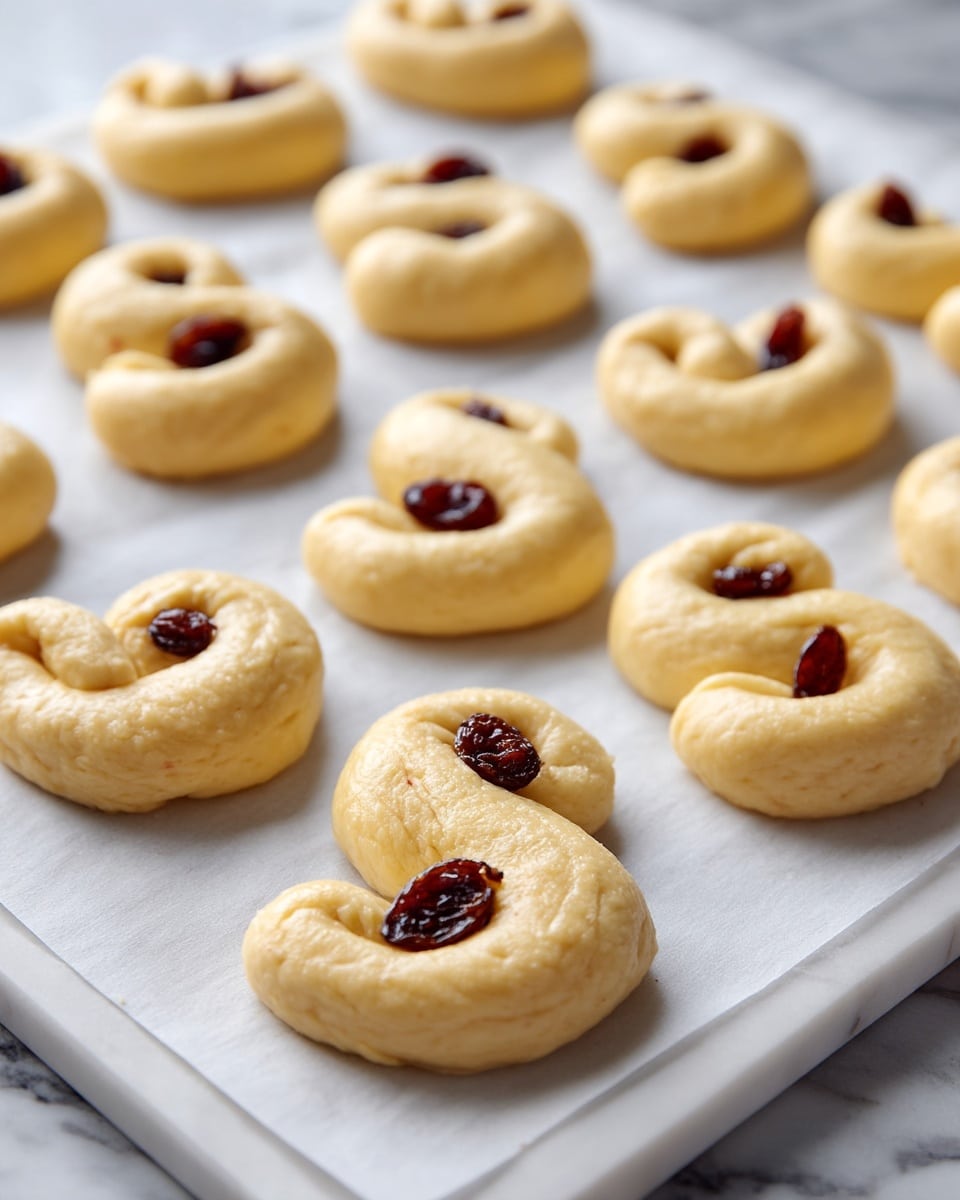
Why You’ll Love Swedish Saffron Buns – Lussekatter Recipe
Beautiful golden color: I use saffron to give the buns their signature yellow hue.
Soft and fluffy: The enriched dough creates tender, delicious rolls.
Festive appearance: I shape the dough into traditional S-shaped swirls.
Simple ingredients: I make these buns with everyday baking staples and saffron.
Perfect for sharing: I enjoy serving them during holiday celebrations.
Ingredients
(Note: All ingredient amounts are listed in the recipe card below.)
4 C All Purpose/ Bread Flour (500g)
1 C Milk (+ a little more as needed)
1/4 Tsp Saffron 15- 20 strands
4 Tbsp Butter
1 1/4 Tsp Fine Sea Salt (8g)
2 1/4 Tsp Yeast (7g or 1 pkt)
4 Tbsp Sugar
2 Eggs
1 – 2 Tbsp Raisins/Currants
Directions
1. Infuse the saffron: I crush the saffron, heat 1/4 cup milk, and sprinkle the saffron over it. I let it cool to room temperature.
2. Activate the yeast: I warm another 1/4 cup milk to 110°F, mix in 1 teaspoon sugar, and sprinkle the yeast on top. I let it activate until foamy.
3. Prepare the eggs: I separate one egg, reserving the white for the egg wash. I lightly beat the yolk with the remaining whole egg.
4. Make the dough: I combine flour, sugar, and salt in a bowl. I add the yeast mixture, saffron milk, and eggs, then gradually knead in the butter and remaining milk until smooth.
5. Knead and rise: I knead for 10 minutes by hand or 4 minutes in a stand mixer. I cover the dough and let it rise for 1–1½ hours until doubled.
6. Shape the buns: I punch down the dough and divide it into 12 pieces. I roll each into a 12–14-inch rope, curl the ends into an S shape, and press raisins into the swirls.
7. Second rise: I place the buns on a baking tray, cover them, and let them rise for 30 minutes.
8. Bake: I preheat the oven to 350°F (175°C). I brush the buns with the reserved egg white mixed with 1 teaspoon water and bake for 15–20 minutes until golden.
9. Cool and serve: I transfer the buns to a wire rack and let them cool before serving.
Servings and Timing
Prep Time: 20 minutes
Cook Time: 20 minutes
Inactive Time: 2 hours
Total Time: 2 hours 40 minutes
Servings: 18 buns
I find these buns ideal for holiday breakfasts, afternoon snacks, or sharing with family and friends. The yield may vary depending on how I divide the dough.
Variations
Extra sweet: I sprinkle a little sugar over the buns before baking.
Cardamom flavor: I add ground cardamom for a warm, aromatic twist.
Dairy-free version: I replace butter with plant-based butter and use dairy-free milk.
Different shapes: I form the dough into figure-eights or spirals instead of traditional S shapes.
Chocolate variation: I replace the raisins with small chocolate chips.
Storage/Reheating
Room Temperature: I store cooled buns in an airtight container for up to 2 days.
Refrigerator: I keep them refrigerated for up to 5 days, although I prefer storing them at room temperature for the softest texture.
Freezer: I freeze the buns in airtight freezer bags for up to 3 months.
Reheating: I warm the buns in a 300°F oven for 5–7 minutes or microwave them briefly until soft.
FAQs
1. What Are Lussekatter?
I know Lussekatter as traditional Swedish saffron buns, commonly enjoyed during St. Lucia celebrations in December.
2. Why Is Saffron Used in These Buns?
I use saffron for its delicate floral flavor and beautiful golden-yellow color.
3. Can I Make the Dough Ahead of Time?
Yes, I refrigerate the dough overnight after the first rise, then shape and bake it the next day.
4. Can I Use Instant Yeast?
Yes, I can use instant yeast and mix it directly with the dry ingredients.
5. Why Didn’t My Dough Rise?
I check that my yeast is fresh, the milk isn’t too hot, and the dough is resting in a warm place.
6. Can I Make These Buns Without Raisins?
Absolutely! I simply leave them out or replace them with dried cranberries.
7. How Do I Keep the Buns Soft?
I avoid adding too much flour and make sure not to overbake them.
8. Can I Use Bread Flour Instead of All-Purpose Flour?
Yes, I use either flour, although bread flour creates a slightly chewier texture.
9. Can I Freeze Unbaked Lussekatter?
Yes, I freeze the shaped dough and thaw it in the refrigerator before allowing it to rise and baking.
10. What Can I Serve With Swedish Saffron Buns?
I love serving them with coffee, tea, hot chocolate, or a little butter and jam.
Conclusion
Swedish Saffron Buns – Lussekatter are a wonderful holiday treat with a soft texture, delicate saffron aroma, and beautiful golden color. I love making these traditional S-shaped buns for Christmas celebrations or cozy breakfasts. With simple ingredients and a little patience, I can create a delicious homemade pastry that’s perfect for sharing.
Swedish Saffron Buns, also known as Lussekatter or Lucia Rolls, are soft, fluffy, golden pastries traditionally enjoyed during Sweden’s St. Lucia and Christmas celebrations. Infused with delicate saffron and shaped into beautiful S-shaped swirls decorated with raisins, these festive homemade buns are perfect for holiday breakfasts, afternoon coffee, and seasonal gatherings.
Ingredients
4 cups (500 g) all-purpose flour or bread flour
1 cup (240 ml) milk, plus a little extra if needed
2 1/4 teaspoons (7 g or 1 packet) active dry yeast
4 tablespoons (50 g) granulated sugar, divided
2 large eggs, one separated
1–2 tablespoons raisins or dried currants, for decoration
1 teaspoon water, for the egg wash
Instructions
Prepare the saffron infusion by gently crushing the saffron threads using a mortar and pestle or the back of a spoon. Heat 1/4 cup of the measured milk until warm, then add the crushed saffron. Stir gently and allow the mixture to steep and cool to room temperature, releasing its golden color and delicate aroma.
Activate the yeast by warming another 1/4 cup of the measured milk to approximately 110°F (43°C). Stir in 1 teaspoon of the measured sugar, sprinkle the active dry yeast over the surface, and let stand for 5–10 minutes until foamy and bubbly.
Prepare the eggs by separating one egg, placing the white in a small bowl for the egg wash. Lightly beat the remaining egg yolk together with the second whole egg and set aside.
In a large mixing bowl or the bowl of a stand mixer, combine the flour, remaining granulated sugar, and fine sea salt. Mix briefly to distribute the dry ingredients evenly.
Add the activated yeast mixture, cooled saffron-infused milk, and beaten eggs to the flour mixture. Begin mixing, gradually adding the remaining milk until a soft dough forms.
Gradually incorporate the softened butter into the dough, kneading until fully absorbed. Continue kneading for approximately 10 minutes by hand or 4–6 minutes using a stand mixer fitted with a dough hook, until the dough becomes smooth, elastic, and slightly tacky. Add a small amount of extra milk if the dough feels too dry, or a light dusting of flour if excessively sticky.
Shape the dough into a ball and transfer it to a lightly greased bowl. Cover with a clean kitchen towel or plastic wrap and place in a warm, draft-free location. Allow the dough to rise for approximately 1–1 1/2 hours, or until doubled in size.
Once the dough has risen, gently punch it down to release excess air. Transfer it to a lightly floured work surface and divide it into 12 equal portions for larger buns or 18 equal portions for smaller buns.
Roll each dough portion into a smooth rope approximately 12–14 inches long for larger buns, or slightly shorter for smaller buns. Curl one end of the rope inward in one direction and the opposite end inward in the other direction to create the traditional S-shaped Lussekatter design.
Place the shaped buns on parchment-lined baking sheets, leaving enough space between them for expansion. Gently press one or two raisins or currants into the center of each curled end to create the classic decorative appearance.
Cover the shaped buns loosely with a clean kitchen towel and allow them to rise for approximately 30 minutes, or until noticeably puffy.
While the buns complete their second rise, preheat the oven to 350°F (175°C). Prepare the egg wash by lightly whisking the reserved egg white with 1 teaspoon of water until combined.
Gently brush the tops of the risen buns with the prepared egg wash, taking care not to deflate the dough. Make sure the raisins remain securely pressed into the swirls.
Bake in the preheated oven for approximately 15–20 minutes, depending on bun size, until the buns are lightly golden on top and baked through. Smaller buns may finish baking sooner, so begin checking near the 15-minute mark.
Remove the baking sheets from the oven and allow the buns to rest briefly before transferring them to a wire rack. Let them cool slightly before serving.
Serve the Swedish saffron buns warm or at room temperature with coffee, tea, hot chocolate, butter, or your favorite jam.
Notes
Traditional Swedish pastry: Lussekatter are classic saffron-flavored sweet buns commonly served during St. Lucia celebrations on December 13 and throughout the Christmas season in Sweden.
Saffron quality: Use good-quality saffron threads for the best golden-yellow color, delicate floral aroma, and authentic flavor.
Saffron infusion: Crushing and steeping saffron in warm milk helps release its color and flavor more evenly throughout the dough.
Milk temperature: Keep the milk used for activating yeast around 110°F (43°C). Excessively hot milk can damage or kill the yeast.
Yeast substitution: Instant yeast can replace active dry yeast in the same quantity. Mix instant yeast directly with the dry ingredients instead of activating it separately.
Flour selection: All-purpose flour produces tender buns, while bread flour creates a slightly chewier texture with more structure.
Dough consistency: The dough should feel soft, smooth, elastic, and slightly tacky. Avoid adding excessive flour, which can make the buns dense or dry.
Kneading: Knead thoroughly to develop gluten and create a soft, fluffy texture. The dough should stretch without tearing easily when properly kneaded.
First rise: Allow the dough to rise in a warm, draft-free location until doubled in size. Rising time may vary depending on room temperature.
Shaping tip: Roll each portion into an even rope and curl the ends in opposite directions to form the traditional S-shaped Lucia bun.
Raisin decoration: Press raisins or currants firmly into the center of each swirl so they remain in place during baking.
Yield adjustment: Divide the dough into 12 portions for larger buns or 18 portions for smaller buns. Baking time may vary depending on size.
Extra sweet variation: Sprinkle a small amount of granulated or pearl sugar over the buns before baking for additional sweetness and texture.
Cardamom variation: Add 1/2 teaspoon ground cardamom to the flour mixture for a warm, aromatic Scandinavian-inspired flavor.
Dairy-free variation: Replace regular milk with unsweetened plant-based milk and substitute dairy-free butter for regular butter.
Alternative shapes: Shape the dough into figure-eights, spirals, or decorative twists instead of traditional S-shaped buns.
Chocolate variation: Replace the raisins with small chocolate chips for a sweeter, modern variation.
Dried fruit substitutions: Dried cranberries or small pieces of dried cherries can replace raisins or currants.
Make ahead: Prepare the dough in advance and refrigerate it overnight after the first rise. Allow it to become workable before shaping, then complete the second rise and bake as directed.
Freezing unbaked buns: Freeze shaped, unbaked buns on a baking sheet until firm, then transfer to freezer-safe containers. Thaw overnight in the refrigerator, allow to rise until puffy, and bake as directed.
Prevent dry buns: Avoid overbaking and use only enough flour to make the dough manageable. Store the buns promptly after cooling.
Room temperature storage: Store completely cooled buns in an airtight container at room temperature for up to 2 days.
Refrigeration: Refrigerate the buns in an airtight container for up to 5 days, although room-temperature storage is preferred for the softest texture.
Freezing baked buns: Place completely cooled buns in airtight freezer bags or containers and freeze for up to 3 months for the best quality.
Thawing: Thaw frozen buns at room temperature while covered to help retain moisture.
Oven reheating: Warm buns in a preheated 300°F (150°C) oven for approximately 5–7 minutes until soft and heated through.
Microwave reheating: Microwave individual buns briefly for approximately 10–15 seconds, checking frequently to avoid drying them out.
Serving suggestions: Enjoy with freshly brewed coffee, black tea, hot chocolate, butter, fruit preserves, or jam.
Holiday presentation: Arrange the golden S-shaped buns on a festive platter for Christmas breakfast, St. Lucia celebrations, or holiday gatherings.
Timing note: The total time of approximately 2 hours 40 minutes includes 20 minutes of active preparation, 20 minutes of baking, and approximately 2 hours of inactive rising and resting time.
Nutrition information is estimated per bun based on a yield of 18 smaller buns using the listed ingredients. Actual values vary depending on flour, milk, butter, and portion size.