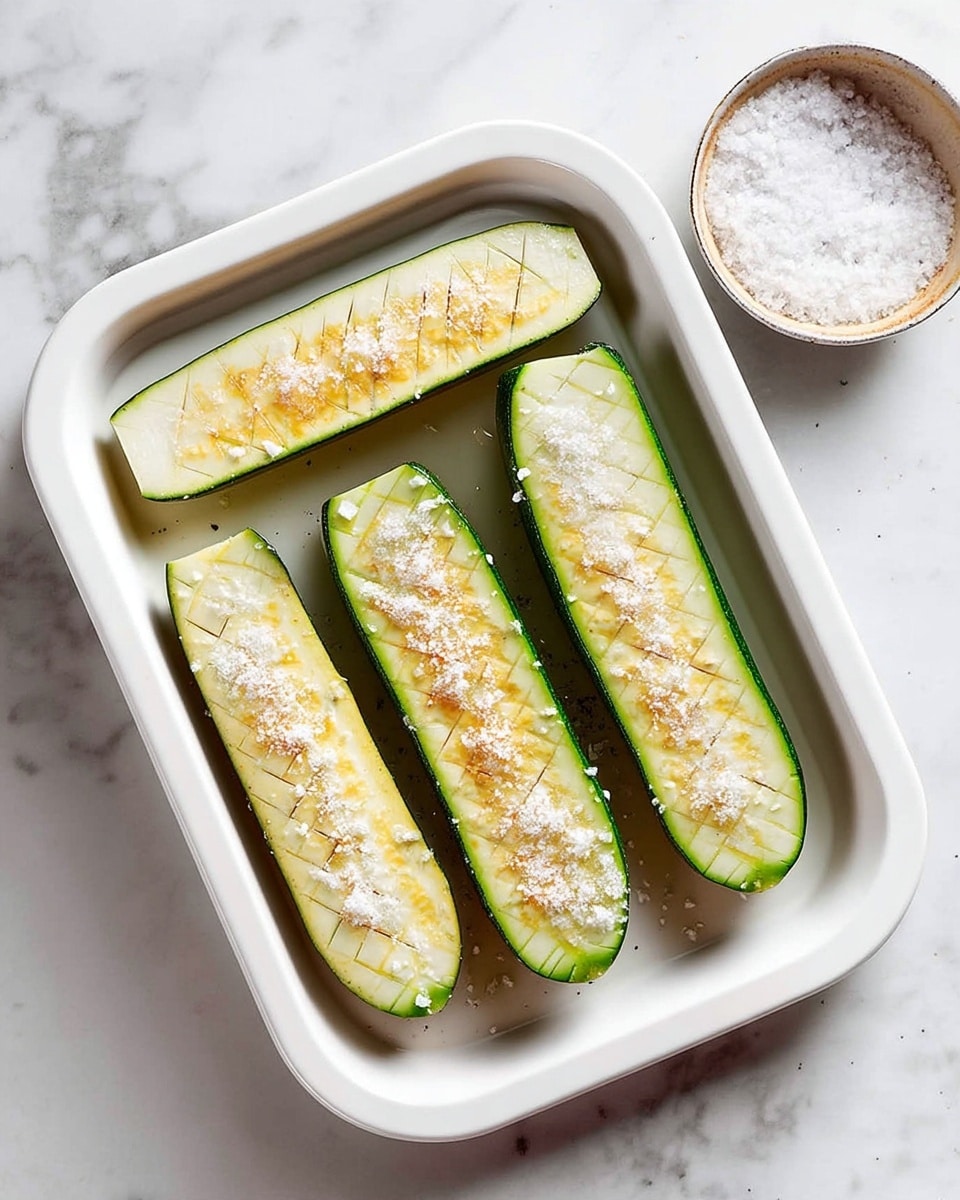
I love how this recipe uses a simple cooking technique to give zucchini much more flavor and texture. Scoring and salting the zucchini helps manage its moisture, while the hot skillet creates a beautifully browned surface.
I also like that I can make the fresh tomato sauce while the zucchini rests. The juicy tomatoes, champagne vinegar, shallot, olive oil, and thyme create a fresh, tangy topping that balances the rich caramelized flavor of the zucchini.
Another reason I enjoy this recipe is how quickly it cooks. Once the zucchini has rested, I only need about 4 to 5 minutes to sear it and about 5 minutes to roast it. I get an impressive vegetable side dish without complicated preparation.
Ingredients
(Note: All ingredient amounts are listed in the recipe card below.)
Zucchini
2 medium zucchini, untrimmed (ideally about 8″ long and 8-10 ounces each)
avocado oil to coat the bottom of the skillet (or another neutral oil with a high smoke point, such as canola oil)
kosher salt, enough to fairly liberally salt the cut sides of the zucchini
Fresh Tomato Sauce
1 cup diced Roma or cherry tomatoes, with juicy insides removed
2 tablespoons champagne vinegar
½ tablespoon minced shallot
1 tablespoon extra virgin olive oil
kosher salt, to taste
½ teaspoon fresh thyme leaves, stripped from the stem
fresh basil leaves, optional garnish
Directions
I slice the zucchini in half lengthwise, then score the flesh side in a cross-hatch pattern about ⅛” to ¼” deep.
I sprinkle the cross-hatched flesh fairly liberally with kosher salt and let the zucchini rest for 10 to 15 minutes. This gives the salt time to draw out moisture.
While the zucchini rests, I combine all of the fresh tomato sauce ingredients in a small bowl. I gently fold the mixture every few minutes to distribute the flavors.
Once the zucchini halves have finished resting, I pat them dry with a paper towel. I then preheat the oven to 450°F.
I heat a large oven-safe skillet over medium-high heat. A 12″ cast-iron skillet works especially well. I add enough avocado oil to just coat the bottom of the skillet, which is about 1 tablespoon.
Once the oil is shimmering, I place the zucchini halves cut-side down in the skillet. I sear them until the cut sides are golden brown and beautifully caramelized, about 4 to 5 minutes total. I adjust the heat if I notice them browning too quickly.
I flip the zucchini halves over and transfer the skillet to the oven. I roast the zucchini until it is softened to my liking. I prefer to leave a small amount of toothsome bite rather than cooking it until completely soft, which takes about 5 minutes for medium zucchini of this size.
I arrange the roasted zucchini halves on a serving platter and spoon the fresh tomato sauce over the top. If desired, I finish the dish with fresh basil leaves.
Servings and Timing
I get 4 servings from this recipe, using 2 medium zucchini that are each cut into two halves.
I allow about 25 minutes for preparation, which includes the 10 to 15 minutes needed for the salted zucchini to rest. The actual cooking takes approximately 10 minutes between the stovetop searing and oven roasting.
Yield: 4 servings
Prep time: 25 minutes
Cook time: 10 minutes
Total time: 35 minutes
Variations
I can use either Roma tomatoes or cherry tomatoes for the fresh tomato sauce. I choose whichever tomatoes look freshest and most flavorful.
If I don’t have avocado oil, I can use another neutral oil with a high smoke point, such as canola oil. I avoid relying on extra virgin olive oil for the high-heat searing step because I want an oil suited to the intense skillet heat.
I sometimes add extra fresh herbs to the tomato topping. Basil is already an optional garnish, but I can add a little more thyme or another mild fresh herb when I want a more herbaceous finish.
For additional richness, I can finish the zucchini with a small amount of grated Parmesan after roasting. I add it just before serving so it complements rather than covers the fresh tomato topping.
I can also make the tomato topping slightly more substantial by adding additional diced tomatoes. I keep the tomatoes well drained so the finished dish doesn’t become excessively watery.
Storage/Reheating
I think this zucchini is at its best immediately after cooking because that’s when I get the strongest contrast between the caramelized exterior, tender interior, and fresh tomato topping.
If I have leftovers, I transfer them to an airtight container and refrigerate them for up to 3 days. When possible, I store the tomato sauce separately from the zucchini so the roasted surface doesn’t absorb too much moisture.
To reheat the zucchini, I prefer using the oven. I place it on a baking sheet and warm it at about 350°F until heated through. This method helps preserve more of the roasted texture than microwaving.
I can also use the microwave when I’m short on time, although the zucchini will generally become softer. I add the fresh tomato sauce after reheating rather than heating it along with the zucchini.
FAQs
Why do I salt the zucchini before cooking it?
I salt the cut sides because zucchini contains a significant amount of moisture. Allowing the salted zucchini to rest helps draw some moisture to the surface, which I can then blot away before searing.
Why do I score the zucchini in a cross-hatch pattern?
I score the flesh to create more surface texture and help the zucchini cook beautifully. The cross-hatch pattern also gives the finished zucchini its distinctive appearance and allows the scored surface to develop plenty of caramelization.
How deep should I score the zucchini?
I make my cuts approximately ⅛” to ¼” deep. I want to score the flesh without cutting so deeply that the zucchini halves become difficult to handle.
Can I use a regular skillet instead of cast iron?
I can use another large oven-safe skillet that handles high heat well. The important part is making sure the skillet can safely move from the stovetop into a 450°F oven.
How do I know when the skillet is hot enough?
I wait until the oil is shimmering before adding the zucchini. I want the pan hot enough to quickly caramelize the cut surface rather than slowly steaming the zucchini.
Why isn’t my zucchini getting golden brown?
I make sure I pat the zucchini thoroughly dry after salting it and wait until the skillet and oil are properly heated. Excess moisture or insufficient heat can interfere with browning.
Can I make the fresh tomato sauce ahead of time?
I can prepare the tomato mixture shortly before cooking the zucchini. I like giving the ingredients some time together because the flavors begin to mingle, but I still prefer the sauce fresh.
Can I use cherry tomatoes instead of Roma tomatoes?
I can use either Roma or cherry tomatoes. I remove the juicy insides as directed so the tomato sauce doesn’t add excessive liquid to the roasted zucchini.
How do I keep the zucchini from becoming mushy?
I watch the roasting time carefully. After searing, I roast the zucchini only until it reaches the tenderness I prefer. For zucchini with a little toothsome bite, about 5 minutes in the hot oven is enough for medium zucchini of the specified size.
What can I serve with Thomas Keller Zucchini?
I like serving this zucchini as a vegetable side alongside roasted or grilled meat or fish. I can also pair it with other vegetables, grains, or a fresh salad to create a larger meal.
Conclusion
Thomas Keller Zucchini shows me how a few thoughtful cooking techniques can turn an everyday vegetable into an impressive side dish. I love the contrast between the beautifully caramelized cross-hatched surface and the tender zucchini underneath, while the fresh tomato sauce brings acidity, herbs, and brightness to every bite. With 4 servings and a total preparation and cooking time of about 35 minutes, I can make this elegant zucchini dish for both weeknight meals and special occasions.
Thomas Keller Zucchini features deeply caramelized, cross-hatched zucchini finished in a hot oven and topped with a bright, tangy fresh tomato sauce. It is an elegant yet simple vegetable side dish with tender texture and fresh herb flavor.
Ingredients
2 medium zucchini, untrimmed (ideally about 8 inches long and 8–10 ounces each)
Avocado oil, enough to coat the bottom of the skillet (about 1 tablespoon), or another neutral high-smoke-point oil such as canola oil
Kosher salt, enough to fairly liberally salt the cut sides of the zucchini
1 cup diced Roma or cherry tomatoes, with juicy insides removed
2 tablespoons champagne vinegar
½ tablespoon minced shallot
1 tablespoon extra virgin olive oil
Kosher salt, to taste
½ teaspoon fresh thyme leaves, stripped from the stem
Fresh basil leaves, optional garnish
Instructions
Slice the zucchini in half lengthwise. Score the flesh side of each half in a cross-hatch pattern, making the cuts about ⅛ to ¼ inch deep without cutting through the zucchini.
Sprinkle the scored sides fairly liberally with kosher salt and let the zucchini rest for 10–15 minutes to draw out excess moisture.
While the zucchini rests, combine the diced tomatoes, champagne vinegar, shallot, extra virgin olive oil, salt to taste, and fresh thyme in a small bowl. Gently fold the mixture every few minutes to distribute the flavors.
Pat the rested zucchini thoroughly dry with a paper towel. Preheat the oven to 450°F.
Heat a large oven-safe skillet, preferably a 12-inch cast-iron skillet, over medium-high heat. Add enough avocado oil to just coat the bottom of the skillet, about 1 tablespoon.
When the oil is shimmering, place the zucchini halves cut-side down in the skillet. Sear for about 4–5 minutes, or until the scored surfaces are deeply golden brown and caramelized. Adjust the heat as necessary to prevent burning.
Flip the zucchini halves over and transfer the oven-safe skillet to the preheated oven. Roast for about 5 minutes, or until the zucchini is tender while retaining a slightly firm bite.
Arrange the roasted zucchini on a serving platter and spoon the fresh tomato sauce over the top. Garnish with fresh basil leaves if desired and serve immediately.
Notes
Salting the zucchini before cooking draws excess moisture to the surface and helps promote better caramelization during searing.
Pat the zucchini thoroughly dry after its 10–15 minute rest to encourage deep browning rather than steaming.
Roma or cherry tomatoes both work well for the fresh tomato sauce; remove their juicy insides to prevent the topping from becoming watery.
Canola oil or another neutral high-smoke-point oil can replace avocado oil for searing.
A small amount of freshly grated Parmesan can be added after roasting for a richer finish.
For zucchini with a slightly firm, toothsome texture, avoid over-roasting after the initial sear.
Store leftovers in an airtight container in the refrigerator for up to 3 days, preferably keeping the tomato sauce separate from the zucchini.
Reheat the zucchini in a 350°F oven until warmed through and add the fresh tomato sauce afterward for the best texture.